

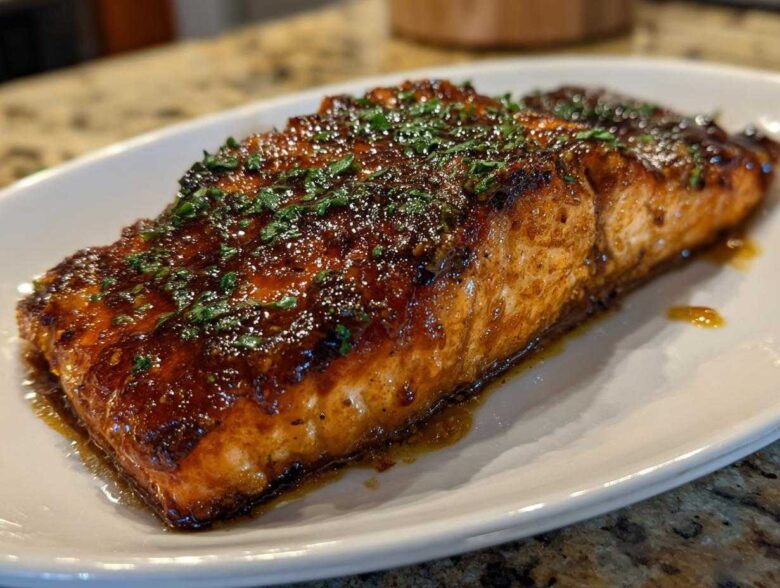
Are you tired of those weeknight dinners that just taste… fine? I know I used to be! Ethan always wants that huge, smoky steakhouse flavor, but I’m the one trying to get us a healthy, delicious meal on the table faster than we can decide on takeout. Well, friends, we finally cracked the code for the ultimate compromise: Restaurant-Quality Texas Roadhouse Style salmon, baked perfectly, in under 25 minutes. This recipe blends my need for tested structure with Ethan’s love for bold flavor. It means you get that melt-in-your-mouth tender, glazed fish without spending an hour in the kitchen. If you want to know more about how we balance things in our kitchen, check out our story over at our About Us page. Trust me on this one—this is the best way to cook fish when you want maximum impact for minimum effort.
Why This Texas Roadhouse Style Baked Salmon is Your New Favorite Quick Dinner Ideas
Seriously, if you need Quick Dinner Ideas that feel fancy but are actually lightning fast, stop scrolling right now. This entire salmon adventure, from prepping the spices to pulling it out of the oven, takes less than 30 minutes total. That’s perfect for those nights when you’re running on fumes but still want something way better than frozen chicken nuggets.
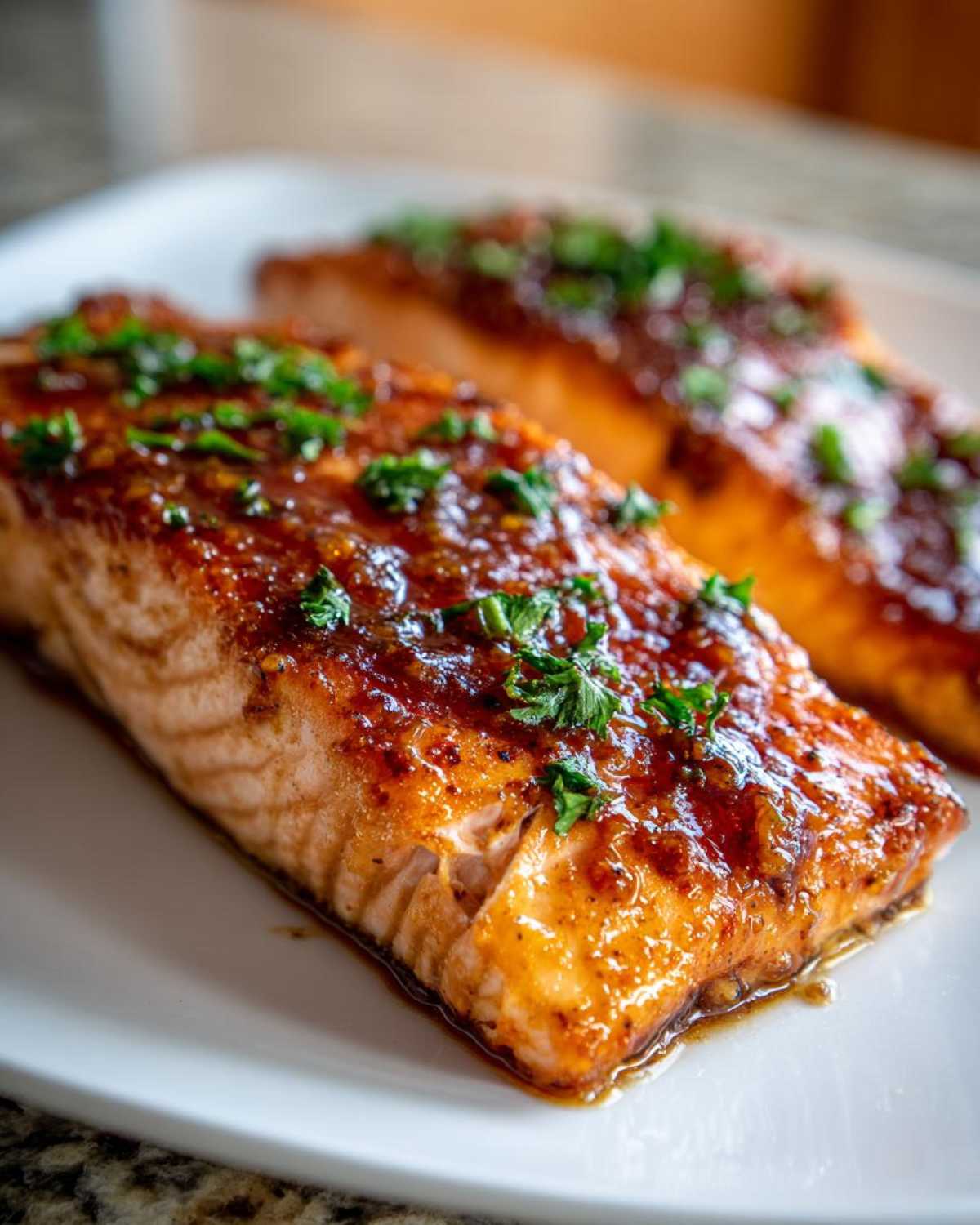
The flavor profile is what hooked Ethan immediately—it’s smoky, savory from the spices, but has that gorgeous, sticky sweet glaze kicking in thanks to the honey. The result? The most gorgeous, Flaky Salmon Fillets you’ll ever serve on a Tuesday night. It’s amazing how much satisfaction you can get from that quick cook time!
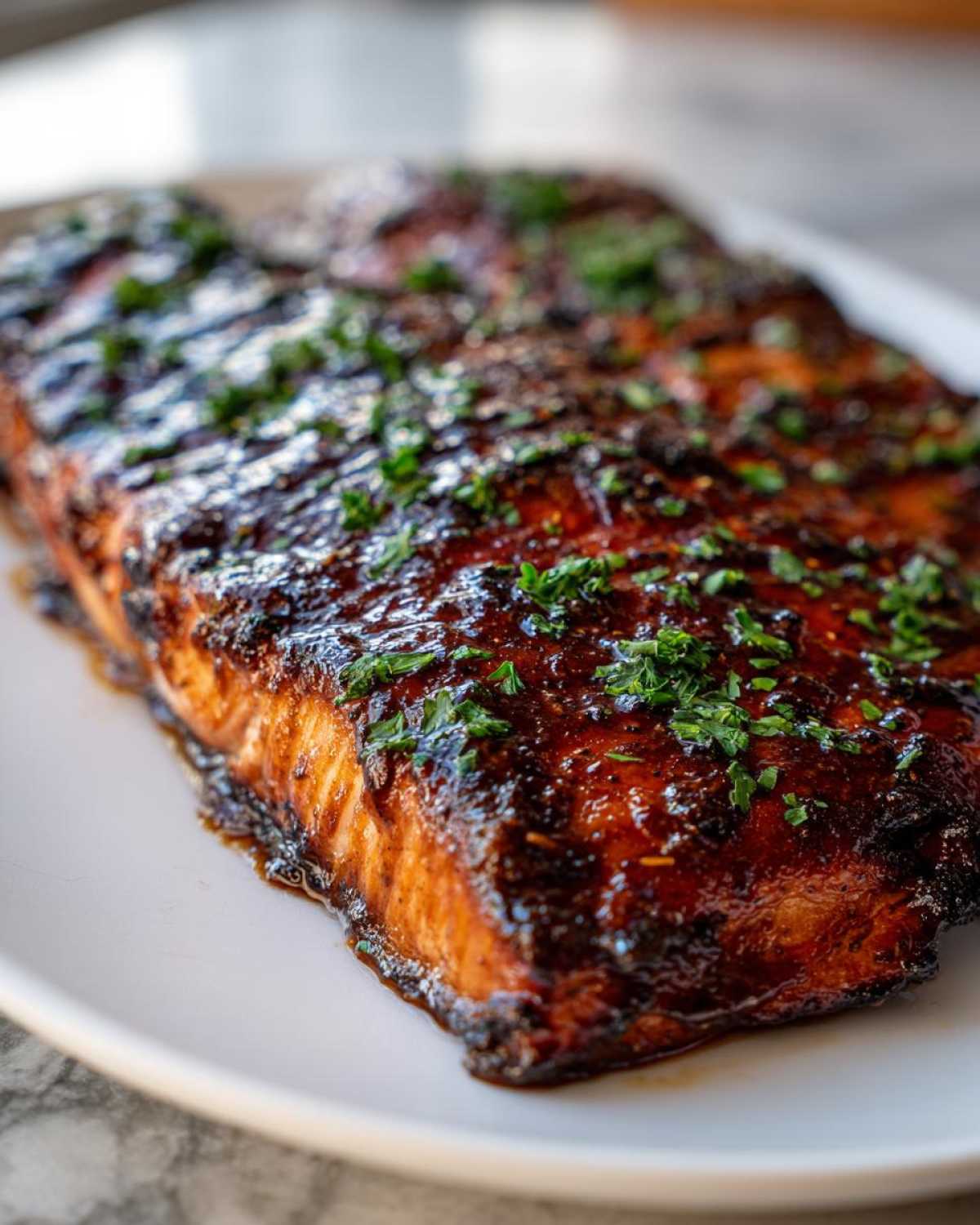
If you’re looking for more ways to speed up your week, check out how we plan our fastest 25-minute salmon meals.
Achieving Restaurant Style Salmon Texture at Home
Okay, for that incredible Restaurant Style Salmon texture, you need two non-negotiables. First thing: pat those fillets bone dry with paper towels. I know, I know, it sounds tedious, but if you skip this, you just steam the outside instead of getting that nice sear structure. Ethan insists this is the secret to getting the best texture possible.
Second, we are baking at 400°F. That higher heat helps set the glaze quickly and produces that wonderfully Moist and Juicy Salmon interior we are aiming for. It cooks fast enough that it doesn’t dry out, but hot enough to caramelize the glaze just right. It’s the perfect dance between two temperature extremes!
Ingredients for Perfect Baked Salmon with Sweet Glaze
Gathering your ingredients is half the battle, and this list is super straightforward. These components are what turn simple fish into gorgeous Honey Glazed Salmon. You’ll need the salmon fillets, some olive oil for the rub, and the spices. Don’t forget the butter—it is essential!
Here’s what you need for four servings:
- 4 (6 ounce) salmon fillets, skin on or off
- 1 tablespoon olive oil
- 1 teaspoon salt
- 1/2 teaspoon black pepper
- 1 teaspoon smoked paprika
- 1/2 teaspoon garlic powder
- 1/4 teaspoon onion powder
- 1/4 cup unsalted butter, melted
- 1/4 cup honey
- 2 tablespoons Worcestershire sauce
- 1 tablespoon Dijon mustard
- 1 teaspoon brown sugar
- 2 cloves garlic, minced
- 1 teaspoon lemon juice
- Fresh parsley, chopped (for garnish)
Ingredient Spotlight: The Secret to the Glaze
The reason Ethan loves this glaze so much—and why it’s our perfect Texas Roadhouse Salmon Copycat—is the balance. Honey brings the sweetness we all crave when we think of baked fish, but without the Dijon and Worcestershire, it would just taste like candy!
The Dijon mustard and Worcestershire sauce provide that critical savory counterpoint. That little bit of acid and deep umami cuts through the sweetness beautifully. It’s that scientific balance of salty, sweet, and tangy that keeps you coming back for another bite. It’s a classic pairing, truly!
How to Make Restaurant Style Salmon: Step-by-Step Instructions
This is where the research meets Ethan’s timing! Getting this salmon nailed down in 25 minutes means we have to follow the sequence exactly. We’re aiming for gorgeous caramelization without turning that honey glaze into charcoal, which is why this recipe smartly uses a two-step layering approach. You can peek at my details on pan-searing versus baking over at my guide for sheet pan garlic parmesan salmon, but for this Texas Roadhouse style, the oven is king.
Seasoning and Initial Bake for Tender Salmon Fillets
First thing first: get that oven humming at 400 degrees—no cheating on the preheat! Line your sheet pan; trust me, cleanup is zero hassle this way. Once your very dry fillets are nestled in, grab that olive oil and spice mix—the smoked paprika is key here for that smoky hint! Rub it all over. Then, take about half of that beautiful, melted butter and honey mixture and brush it on generously. Pop that pan in for just 10 minutes to get the initial cook started and start forming those Flaky Salmon Fillets.
The Second Glaze Application for Caramelization
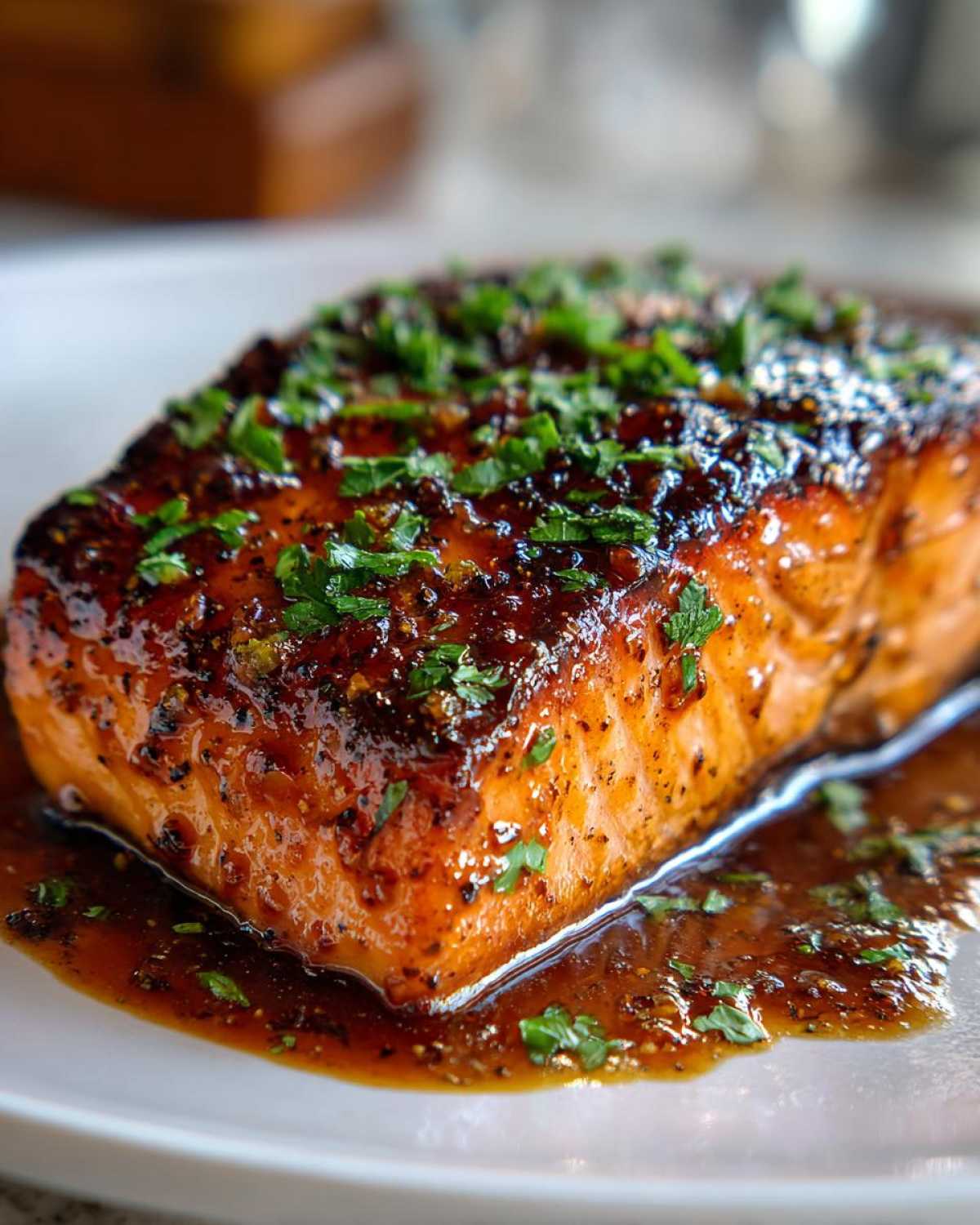
When those 10 minutes are up, pull the pan out quick! Don’t worry, it’s not done yet. Now you paint on the rest of that sweet, garlicky glaze. This second layer is critical because brushing it on halfway gives the first layer time to set up. That way, when it goes back in for the final 5 to 8 minutes, it browns and thickens without burning.
When you’re checking for doneness, don’t just yank it out willy-nilly. We’re looking for that textbook 145°F core temperature, or, using the fork test, it should flake apart easily. Letting it rest for two minutes after it comes out is non-negotiable; that keeps all the juices sealed right where they belong!
Tips for Achieving Crispy Skin Salmon or Perfect Glaze
We’ve talked about making this salmon tender, but I know so many of you out there are chasing that ultimate textural contrast: that impossibly crisp skin! Since this Texas Roadhouse style focuses on that rich glaze, sometimes the skin misses out on getting properly crackly. But don’t worry, Ethan has tested this extensively when he’s making Garlic Butter Salmon variations.
The key to great texture, whether you want Crispy Skin Salmon or just deeply caramelized glaze spots, is knowing when to let the heat ramp up. The initial baking gets the fish cooked through, but the final push is what locks in that restaurant-quality finish.
Quick Broiler Trick for Extra Browning
If you have skin-on fillets and you want that serious crunch, this is the secret weapon. Once your salmon hits that perfect internal temperature (about 12 minutes total bake time), you switch gears. Turn the oven setting to broil—high heat!
You need to watch this like a hawk, I mean it! It only takes 60 to 120 seconds, depending on how close the rack is to the element. Keep the door slightly ajar if your oven gets too hot too fast. You are looking for the glaze to bubble aggressively and maybe get a few wonderfully dark brown spots. That ultra-quick blast of top-down heat crisps the skin beautifully and sets the glaze so it doesn’t run everywhere when you serve it. If you use this trick, pull it out right when it smells amazing, not when it starts to look black!
Making Easy Salmon Recipes a Weeknight Salmon Dinner Staple
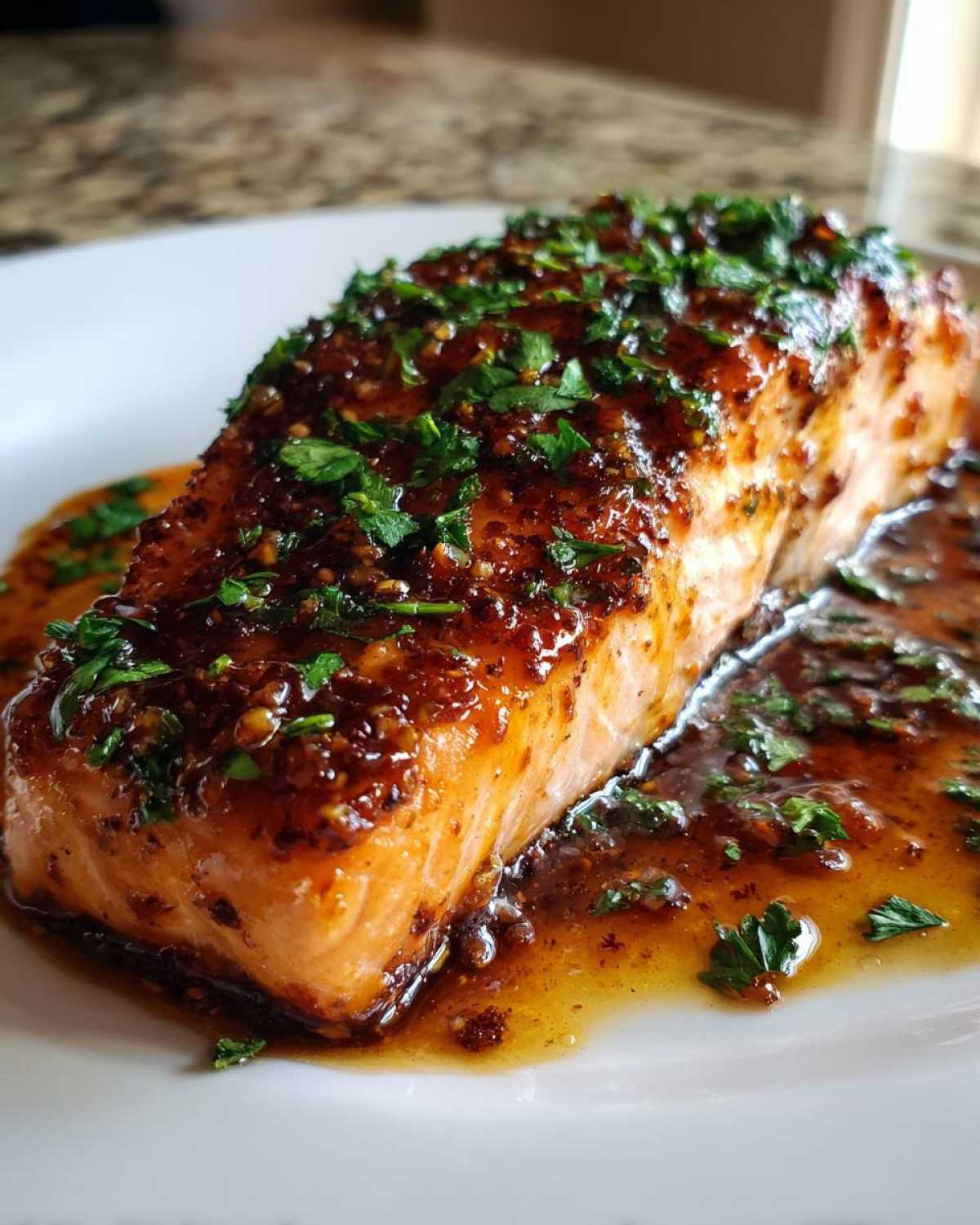
This recipe truly proves that Easy Salmon Recipes can still be elegant enough for company. Ethan always says, “Why do the prep work for an hour if you only eat for ten minutes?” And honestly, he’s right when it comes to weeknights!
The best part for me, the researcher who hates scrubbing pans, is the cleanup. Since we line the baking sheet—whether with foil or parchment paper—the dishes are minimal. We have the one small bowl for the glaze, the spice bowl, and the sheet pan. That’s practically nothing!
Because the active prep time is just 10 minutes, this easily earns its spot as a premium Salmon Weeknight Dinner. You can have this on the table in the same amount of time it takes to decide on ordering takeout. When you’re looking for more tried-and-true weeknight solutions, you can always check out what else we’ve been experimenting with over on our main blog page!
Serving Suggestions for Your Honey Glazed Salmon
So, you’ve nailed that gorgeous, sticky glaze on your Honey Glazed Salmon—congratulations! Now, what are we going to put next to it? You don’t want to spend another hour cooking sides after all that flavor work you just did on the fish. Luckily, this smoky, sweet profile plays nicely with just about anything simple, especially things that can soak up extra bits of that buttery sauce that pool on the plate.
The recipe notes mentioned two of our absolute favorites, and they are perfect because they require almost zero fuss. First up has to be creamy, fluffy mashed potatoes. That sweet glaze mixed just slightly into the potato? Perfection! It makes the fish feel like a legitimate, hearty meal. I have a fantastic recipe for roasted carrots with that same honey garlic butter base that works beautifully as a side, too.
But if you’re aiming for lighter and greener, simple roasted asparagus is the answer. Toss those spears with just a little bit of olive oil, salt, and pepper, roast them alongside the salmon if you have space, or steam them quickly. The slight bitterness of the asparagus is a wonderful contrast to the richness of the glaze. Honestly, anything green and slightly sharp works to cut through that sweet coating, making every bite of your salmon really pop!
Storage and Reheating Instructions for Leftover Salmon
Look, this salmon is so good, it rarely lasts until the next day here! But life happens, and sometimes you have leftovers of this amazing glazed fish. The good news is that because we baked it with that rich butter and honey mixture, it actually holds up pretty well, provided you store it correctly. The goal here is basically to keep that delicious glaze from drying out or crystalizing onto the fish.
When storing, make sure you let the salmon cool down slightly first, then tuck it into a really good airtight container. You want to make sure it gets refrigerated within two hours, just like any good fish leftovers should. It usually keeps nicely in the fridge for about two to three days. Don’t leave it longer than that; we want this to be a treat, not a science experiment!
Reheating is where you need a little finesse, especially since we want to keep that texture soft and flaky. Please, please, please skip the microwave if you can! It turns beautiful baked fish instantly rubbery. Ethan and I both agree the best way to revive this dish is either in a very low oven or a gentle pan sear.
For the oven method, preheat it low—like 275°F low. Put the salmon on a piece of foil, maybe add just a tiny teaspoon of water or broth to create a little steam bath, wrap it loosely, and heat it slowly for about 8 to 10 minutes, until it’s just warmed through. That steam helps refresh the moisture trapped under the glaze!
If you’re feeling fancy or only reheating one fillet, try the pan sear. Heat a non-stick skillet to medium-low, add just a tiny sliver of butter or oil, and place the fillet skin-side down (if it has skin) or glaze-side down gently. Warm it up just until the bottom is heated through and the glaze looks glossy again. If you see any black spots forming from the original glaze, scrape them off before serving. Simple heat, low and slow, that’s the key to perfect reheated fish!
FAQ About Making This Simple Salmon Marinade
Okay, it’s time for the quick-fire round! Whenever Ethan and I share a recipe, we always end up with a pile of little questions about substitutions or timing. That’s normal! We’ve covered the main recipe, but here are the answers to the little things that might pop up when you’re trying to work this into your routine for a Quick Dinner Idea.
If you’re curious about cooking salmon in a different appliance altogether, I wrote a whole deep dive on using the air fryer for my favorite Air Fryer Salmon technique, which is amazing if you want that ultimate crisp!
Can I substitute the honey in this salmon recipe?
That’s a great question about our Simple Salmon Marinade! Since the honey is helping to create that signature sticky coating, you need something similarly thick and sweet. Maple syrup is probably the closest swap, and it tastes fantastic with the smoky paprika we use here.
If you use maple syrup, the flavor profile will shift just a tiny bit—it’s a little less intensely sweet than honey. You probably don’t need to adjust the cooking time much, but if you swap for something thinner like agave nectar, you might want to reduce the amount by about a teaspoon just to keep the glaze from running right off the fish during that initial bake. Otherwise, go for it!
How long does this baked salmon take to cook?
I love this question because it gets right to the heart of why this recipe works! For a standard 6-ounce fillet, you’re looking at about 18 minutes in the oven total once it’s coated. That’s 10 minutes for the first layer of seasoning and glaze, and then another 5 to 8 minutes after the second glaze coat.
But remember the golden rule for any perfectly cooked salmon: temperature over time! You are done when that internal temperature hits 145°F, or when a fork slides in easily and the flesh separates beautifully. That ensures you get that juicy, tender result every single time, whether your fillets are thick or thin.
Can I use frozen salmon fillets?
Yes, you absolutely can, but you need to be organized! You can’t rush the savory flavor base of this dish, so you have to thaw it properly. I recommend pulling the frozen fillets out overnight and letting them thaw slowly in the refrigerator. This prevents that watery texture you get when you try to blast them in the microwave.
When you drain them in the morning, make sure to still pat them super dry before they hit the spice rub. Since frozen fish can sometimes be slightly less dense than fresh, I would pull them out of the oven about one minute earlier than the fresh recipe calls for, just to double-check that internal temp for safety.
Is this recipe considered a Healthy Fish Dinner?
Absolutely! When you look at the whole picture, this is a wonderfully Healthy Fish Dinner. Salmon is packed with those good fats, and we are relying mostly on honey and olive oil for the rest of the ingredients, steering clear of heavy creams or frying everything in tons of oil. Cooking it in the oven keeps it much cleaner than pan-frying.
Nutritional Estimates for This Healthy Fish Dinner
I’m always thrilled that this incredibly flavorful salmon dish also qualifies as a fantastic Healthy Fish Dinner! Remember that these numbers are just estimates—how much butter you brush on or how much extra glaze you sneak into your mashed potatoes will change things slightly. But for one fillet, here’s a great baseline for what you’re getting:
- Serving Size: 1 fillet
- Calories: 380
- Fat: 20g
- Protein: 35g
- Carbohydrates: 15g
- Sugar: 12g
It’s a huge protein punch with healthy fats, making it a super satisfying meal!
PrintRestaurant-Quality Texas Roadhouse Style Baked Salmon in 25 Minutes
You can make this incredibly flavorful, restaurant-style Texas Roadhouse Salmon at home quickly. This recipe delivers tender, flaky salmon with a smoky, sweet, and savory glaze that impresses guests and satisfies your family on a busy weeknight.
- Prep Time: 10 min
- Cook Time: 18 min
- Total Time: 28 min
- Yield: 4 servings
- Category: Dinner
- Method: Baking
- Cuisine: American
- Diet: Low Fat
Ingredients
- 4 (6 ounce) salmon fillets, skin on or off
- 1 tablespoon olive oil
- 1 teaspoon salt
- 1/2 teaspoon black pepper
- 1 teaspoon smoked paprika
- 1/2 teaspoon garlic powder
- 1/4 teaspoon onion powder
- 1/4 cup unsalted butter, melted
- 1/4 cup honey
- 2 tablespoons Worcestershire sauce
- 1 tablespoon Dijon mustard
- 1 teaspoon brown sugar
- 2 cloves garlic, minced
- 1 teaspoon lemon juice
- Fresh parsley, chopped (for garnish)
Instructions
- Preheat your oven to 400 degrees Fahrenheit. Line a baking sheet with foil or parchment paper for easy cleanup.
- Pat the salmon fillets dry using paper towels. This step helps you achieve a better texture. Place the fillets on the prepared baking sheet.
- In a small bowl, mix the olive oil, salt, pepper, smoked paprika, garlic powder, and onion powder. Rub this seasoning mix evenly over the top and sides of the salmon fillets.
- In a separate small bowl, whisk together the melted butter, honey, Worcestershire sauce, Dijon mustard, brown sugar, minced garlic, and lemon juice to create the glaze.
- Brush about half of the glaze mixture generously over the seasoned salmon fillets.
- Bake the salmon for 10 minutes.
- Remove the baking sheet from the oven and brush the remaining glaze over the fillets.
- Return the salmon to the oven and bake for another 5 to 8 minutes, or until the salmon is cooked through and flakes easily with a fork. The internal temperature should reach 145 degrees Fahrenheit.
- Remove from the oven, let it rest for 2 minutes, and garnish with fresh chopped parsley before serving immediately.
Notes
- For extra crispy edges, you can briefly place the salmon under the broiler for the last 1-2 minutes, watching carefully to prevent burning the glaze.
- If you prefer a thicker glaze, reduce the mixture slightly on the stovetop before brushing it on.
- This salmon pairs well with mashed potatoes or roasted asparagus for a complete, healthy dinner.
Nutrition
- Serving Size: 1 fillet
- Calories: 380
- Sugar: 12
- Sodium: 450
- Fat: 20
- Saturated Fat: 9
- Unsaturated Fat: 11
- Trans Fat: 0
- Carbohydrates: 15
- Fiber: 0
- Protein: 35
- Cholesterol: 95