

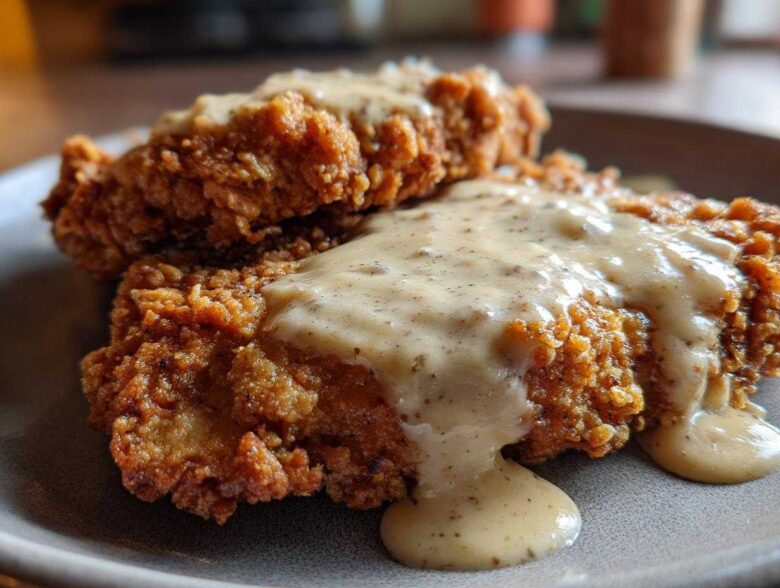
Oh, you know those nights, right? The ones where only something warm, savory, and completely soul-satisfying will do? For me, that craving always leads straight to the king of comfort foods: Chicken Fried Steak. Forget those sad, flimsy versions you get sometimes; I’m talking about the real deal! After years messing around, testing every grease temperature and every dredging trick, I finally nailed the absolute ultimate recipe for chicken fried steak that gives you that unbelievably crispy, golden crust hugging a steak so tender you swear it melted. Trust me, this classic chicken fried steak recipe has taken years to perfect, but now that I have it, I’m never looking back. If you want to know how I figured out all the secrets to this dish, you can read a little bit more about my years in the kitchen over at my About Me page. Let’s get frying!
Why This Is the Ultimate Chicken Fried Steak Recipe (E-E-A-T Focus)
What makes this recipe stand above the rest? It’s all about balancing three huge things: tenderness, crunch, and gravy flavor. Most recipes cheat one of these elements, but we don’t skip steps here. If you follow this crispy fried steak tutorial closely, you get that restaurant-quality payoff every time.
- We start with a long, cold soak for maximum moisture penetration.
- The flour dredge is aggressive—we really want that crust to stick!
- The gravy is made right in the same pan where the flavor lives. No excuses!
Achieving Maximum Tenderness in Your Chicken Fried Steak
The secret to that fall-apart, tender interior starts before you even touch the flour. You absolutely have to pound those cube steaks down thin, about 1/4 inch. I always use the plastic wrap trick so my mallet doesn’t shred the meat unevenly. Then, the buttermilk bath—this stuff works magic! The acid in the buttermilk breaks down those tough muscle fibers during the soak, making the final product super easy to cut. My personal rule is: if you skip the pounding, you deserve a tough steak!
The Secret to a Perfect Crispy Fried Steak Coating
The coating has to be thick and locked on. That’s why after the buttermilk comes the flour dredge, and you have to press it on! If you want the ultimate crunch, try the double-dredge method. That means dip it in the flour, back into the buttermilk quick, and then one more time into the flour mixture. This builds up a thick armor around your meat, making for the most incredible buttermilk battered steak experience once it hits the hot oil. Trust me on that extra step!
Ingredients Needed for Classic Chicken Fried Steak Recipe
Okay, now we get down to brass tacks. You can’t make the best chicken fried steak in the world with sad ingredients, right? Precision here matters, especially when it comes to the steak cut and the milk for the gravy. I’ve included the exact list I use every time this comes out of my kitchen. Don’t substitute the buttermilk, please! It’s the key to unlocking that amazing tenderness for our classic chicken fried steak recipe.
Here is what you need for four big servings—you might want to double this if your family is anything like mine!
- 4 cube steaks (about 4-6 oz each), make absolutely sure they are tenderized!
- 2 cups buttermilk—the good, thick kind!
- 2 teaspoons salt
- 1 teaspoon black pepper
- 1 teaspoon garlic powder
- 1 teaspoon paprika
- 2 cups all-purpose flour (for the crust)
- 1/2 teaspoon cayenne pepper (only if you like a little kick!)
- Vegetable oil or shortening, for frying (you need about 1 inch deep in your skillet)
- 4 tablespoons reserved pan drippings (this is crucial for flavor!)
- 4 tablespoons all-purpose flour (this is separate, for the gravy roux)
- 3 cups whole milk, warmed up beforehand—don’t throw cold milk into hot fat, it’s a disaster!
- Salt and pepper to taste (for finishing the gravy)
See? Simple ingredients that, when treated right, turn into pure magic. Keep these measured out before you start pounding the meat, and everything flows smoothly.
Step-by-Step Instructions for Easy Homemade Chicken Fried Steak
Now that you’ve got your beautiful ingredients ready—and trust me, having everything measured out beforehand makes this feel like a breeze—we can dive into the frying! It sounds intimidating, but if you take it one step at a time, you’ll have the crispiest, most tender chicken fried steak you’ve ever made. Don’t worry about the mess; just grab an apron and let’s go! You can check out some other great quick dinner ideas on my blog when you’re done with this one.
Preparing the Steak and Buttermilk Soak
First things first, we need to get those steaks thin. Place them between plastic wrap—this keeps your counter clean! Take your meat mallet and pound them gently but firmly until they aren’t much thicker than a pencil line. Don’t try to smash them into oblivion, just tenderize them. Next, they go into that lovely buttermilk bath, mixed with all those spices. We usually let them soak for at least 30 minutes, but honestly, if you can let them sit in the fridge for 2 or 3 hours, they come out even better. That acid does the heavy lifting for us!
The Perfect Dredge and Frying Temperatures for Chicken Fried Steak
After the soak, it’s go-time for the crust. Make sure you have that 2 cups of seasoned flour ready to go. Take the steak out of the buttermilk, let the big drips fall off, and then lay it right into the flour. Seriously, press that flour onto the meat. You want full, solid coverage! Once you’re holding a nicely coated steak, heat your oil in a heavy skillet until it hits 325 degrees Fahrenheit. That temperature is gospel for a good crust. Carefully place just one or maybe two steaks in; if you crowd the pan, the oil temperature drops, and you end up with soggy, greasy steak instead of that satisfying, crispy crust we’re gunning for. Three to four minutes per side until that gorgeous deep brown color shows up!
Making the Best Country Gravy for Steak Using Pan Drippings
Okay, listen up, because this is the moment in the whole chicken fried steak process that separates the amateurs from the pros: the gravy. If your steak is crispy but your gravy is lumpy or bland, you haven’t had true Southern comfort food yet! We aren’t wasting a single drop of flavor from that frying pan. Those browned bits stuck to the bottom? That’s called *fond*, honey, and that’s pure gold for flavor!
Here’s how we turn that brown goodness into the best country gravy for steak.
Step one: Pull out about 4 tablespoons of that beautiful leftover oil from frying. If you have way more than that, dump the extra out—we don’t want a greasy gravy. Put the skillet back on medium heat. We’re making a roux! Whisk in 4 tablespoons of flour to those drippings. You stir this mixture constantly until it smooths out into a paste. We cook it for about a full minute—it should start smelling nutty. This cooks out the raw flour taste. This simple, fat-and-flour base is what provides the structure for our creamy white gravy recipe.
Now for the tricky part: the milk. I cannot stress this enough: use warm or hot milk! If you throw in cold milk now, you’ll get clumps that seem impossible to get rid of. Take your 3 cups of warmed milk, and slowly, I mean *slowly*, whisk it into the roux. Keep whisking gently but continuously. As it heats up, the gravy will start to thicken. Keep stirring until it coats the back of your spoon perfectly—that means it’s ready.
My critical tip for the best flavor: Don’t stop seasoning when the recipe says so! Country gravy needs aggressive salting and peppery love to really shine against the rich, crispy steak. Taste it a few times. It should be bold! Drizzle that thick, rich goodness all over the stacked steaks. If you manage to save any leftover gravy, you can find another use for it, like smothering biscuits, or maybe try it over my amazing Cajun Shrimp Alfredo Pasta sometime! Seriously, don’t skimp on this step; it finishes the whole meal.
Tips for Texas Style Chicken Fried Steak Success
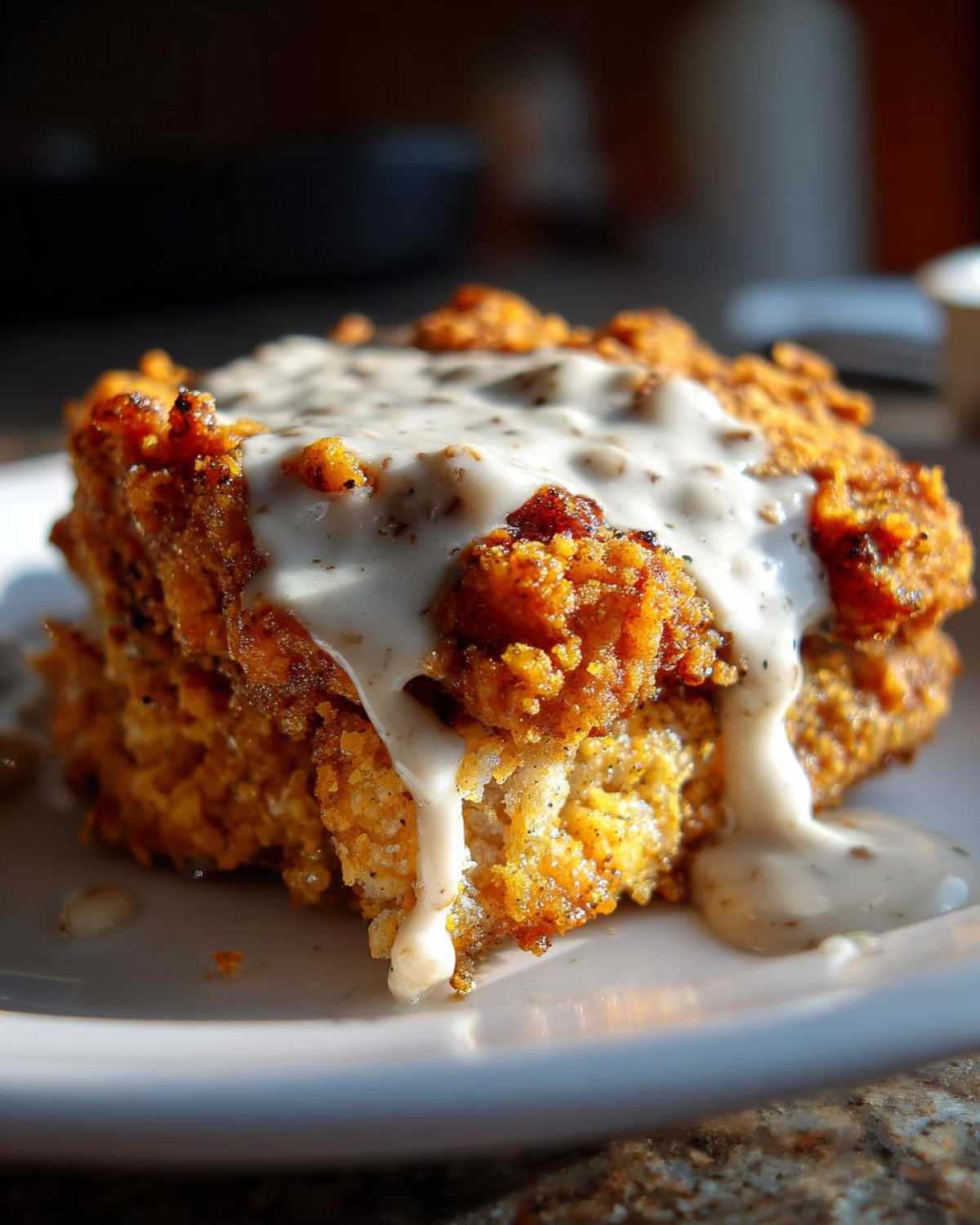
When people talk about true Texas style chicken fried steak, they aren’t messing around. They want that crust to be almost flaky, super thick, and it needs to stand up to the gravy without turning into sad mush after two minutes. We’ve already got the buttermilk soak down, which helps tenderness, but Texas style really relies on its coating technique to hold up during the deep fry. Here are the little things I do to make sure my steak has that sturdy, signature crunch.
First, temperature control is everything, even after the steak is cooked. Once those beauties come out of the oil at 325°F, don’t just stack them on a bare plate. Use a wire rack, like the instructions said, but make sure you keep them warm in a very low oven—like 200 degrees F. This lets air circulate around them, keeping the sides that weren’t touching the oil crisp, too! You’re building a fortress of flavor, not a steam bath!
Another trick I picked up watching folks down South is the ‘wet hand/dry hand’ system when you dredge. Keep one hand assigned only to the wet steak coming out of the buttermilk, and the other hand is strictly for dipping and coating in the flour. This keeps your flour mixture clean, dry, and light. If you accidentally drop your wet hand into the flour bucket, you’ll end up with clumps and pastey spots on your crust, and that’s the fastest way to lose your Texas bragging rights!
Finally, timing the gravy is key. You want that rich gravy hot, but the steak needs to come out ready to go straight into it. My strategy is to use a broiler rack in a sheet pan set to about 200°F while I finish the gravy. They stay piping hot without steaming. When that gravy is perfectly seasoned and silky smooth—and I mean, taste it aggressively—plate that crispy steak up immediately and smother it! If you happen to have leftover gravy from this incredible batch, you should absolutely try this technique over my Spicy Thai Basil Beef Stir-Fry sometime, just kidding! (But seriously, I use this gravy base for so many things.)
Serving Suggestions for a Southern Comfort Food Dinner
You’ve just created the most amazing chicken fried steak, but you can’t just serve it alone, right? That’s just sad! This is the centerpiece of a proper Southern comfort food dinner, so we need sides that embrace the gravy. You absolutely must have creamy, fluffy mashed potatoes—they are the perfect vehicle for soaking up every last bit of that white pepper gravy. And biscuits! Need I say more? Fluffy buttermilk biscuits are essential for scooping up any extra gravy left on your plate.
If you need another rich side dish to complete the plate, I know a fantastic, easy recipe for One-Pot Creamy Tuscan Chicken that pairs nicely if you happen to have guests who don’t eat beef. But honestly, a simple green vegetable like sautéed green beans helps cut through the richness. Enjoy this hearty meal!
Storage and Reheating Instructions for Leftover Chicken Fried Steak
Now, let’s be real. Sometimes you make too much, even when you’re trying not to! Or maybe the kids just couldn’t finish their entire portion. Leftover chicken fried steak is a gift, but if you mess up reheating it, you’re going to end up with something mushy and sad, and we can’t have that. The main thing to remember here, if you want that famous crust back, is separating the components.
Never, ever store the steak sitting in the gravy. The steak will absorb all that liquid and lose every bit of its glorious crunch. So, when you’re putting leftovers away, you need two separate airtight containers: one for the cold, leftover steak and one for the leftover gravy.
Reheating the Steak for Maximum Crispiness
If you want that crunch back, the microwave is your enemy—it steams the crust and makes it chewy. Skip it! Your best bet is the oven, just like we kept them warm earlier. Preheat your oven to about 375 degrees F. If you have a baking sheet handy, pop a wire rack on it, just like we did when they came out of the fryer. This keeps the air moving underneath. Lay your cold steak right on the rack and bake it for about 10 to 12 minutes. You’ll hear it start to sizzle as the crust dries out and crisps up again. It gets wonderfully close to fresh-fried texture this way!
Reviving That Creamy Country Gravy
The gravy is much easier, but still requires a little TLC so it doesn’t break. Put your leftover gravy in a small saucepan over medium-low heat. You need to stir it a lot as it warms up. If it seems too thick—and it probably will be, since the flour absorbs moisture as it cools—just whisk in just a splash of milk, stirring constantly until you hit that perfect, pourable consistency again. If you need to add a little extra pepper or salt to wake the flavor up after warming, go for it! Serve that hot gravy right over the re-crisped steak, and nobody will ever know it wasn’t just made fresh.
Frequently Asked Questions About Making Chicken Fried Steak
I get a ton of questions tumbling into my inbox whenever I post this recipe, and that’s okay! People often wonder about substitutions or if they can skip those messy steps. It’s all about finding what works for you, but I’ll tell you what I’ve learned over the years about making the best chicken fried steak possible. You can always reach out via my contact page if you have something super specific.
Here are some of the most common things folks ask when they are trying to nail that perfect texture and learn how to make tender chicken fried steak at home.
Can I bake or air fry this chicken fried steak instead of frying?
Yeah, you *can*, but look, I want you to have the best experience possible, and deep frying is what gives we that signature, thick, all-encompassing crispiness. If you absolutely must go for the oven or the air fryer, you need to adjust your expectations slightly. Baking or air frying will give you a crust, sure, but it’s never going to have that deep richness or that crackly exterior you get from bubbling hot oil.
If you bake, spray the coated steaks really well with oil spray before you pop them into a hot 425-degree oven. It tends to dry out the steak a bit faster, so keep an eye on the pounding—make them slightly thicker so they don’t get tough before the crust browns. For air frying, 380 degrees for about 10 to 12 minutes works well, but the air fryer basket tends to cook the bottom unevenly unless you flip them halfway through. Honestly, for the payoff of true southern comfort food dinner, it’s worth the little bit of cleanup later to just fry them the right way!
What if I don’t have cube steak? Can I use regular cuts?
That’s a smart question! Cube steak is usually round steak that’s been mechanically tenderized, which helps it break down beautifully when pounded. If you can’t find it labeled as ‘cube steak,’ look for top round or even sirloin steak, and then you just have to do *more* work on the tenderizing step yourself. Make sure you pound that cut really thin—I mean paper-thin! The pounding does most of the same work the machine does, breaking up those tight fibers. If you skip that, no amount of buttermilk will make an inherently tough cut tender enough for an authentic chicken fried steak experience.
What is the best oil to use for frying the steak?
You need an oil with a high smoke point that is also pretty neutral in flavor. High smoke point means it won’t burn up on you when you hit that target temperature of 325°F. I use regular vegetable oil a lot because it’s cheap and reliable. Shortening is fantastic too, especially if you want that really classic flavor that people remember from old family recipes. I find shortening gives the absolute crispiest crust. Just make sure whatever you use, you use enough of it!
How long does the buttermilk marinade really need to sit?
While the recipe says 30 minutes is the minimum, I am begging you to let it go longer if you can! Thirty minutes is just enough time for the surface of the steak to start absorbing the flavor. But for real, top-tier tenderness that qualifies this as genuine Texas style chicken fried steak, stick it in the fridge for at least 2 hours. If you make it the night before, even better! The longer the lactic acid in the buttermilk sits with the meat, the more tender it gets. It’s fantastic for reducing your weeknight cooking stress, too!
Estimated Nutritional Data for This Hearty Meal
Alright, let’s talk turkey—or, well, beef! This is the ultimate feast, right? It’s rich, it’s comforting, and it is definitely not low-calorie heaven, but wow, is it worth every single bite. I put together the estimated nutrition facts below based on the exact proportions listed in the recipe when served as one steak covered in gravy.
Now, just a quick word of warning from my kitchen to yours: I’m not a nutritionist, and these figures are my best educated guess based on standard food calculations. If you use a different brand of buttermilk, or if you decide to go heavy on the pepper in that gravy (which, hey, I support!), these numbers can change a little bit! Always check your specific labels if you’re needing exact counts. You can read more about how I handle recipe data disclosure over on my disclaimer page.
- Serving Size: 1 steak with gravy
- Calories: 750 – Yes, it’s a big meal, so plan accordingly!
- Fat: 45 grams (A lot of that delicious frying fat, sadly!)
- Saturated Fat: 15 grams
- Protein: 48 grams (That steak packs a punch!)
- Carbohydrates: 35 grams
- Sugar: 6 grams
- Sodium: 1100 mg (The gravy adds a good bit here, season carefully!)
See? It’s got the macros for a proper, hearty family dinner! Don’t let the numbers scare you; this is meant to be an occasional treat, and when you decide to splurge, this is the recipe that earns its spot on your table.
PrintUltimate Crispy Buttermilk Chicken Fried Steak with Rich Homemade Country Gravy
Follow this recipe for a classic, tender chicken fried steak with a perfectly crispy coating, served smothered in rich, creamy country gravy made from the pan drippings.
- Prep Time: 20 min
- Cook Time: 25 min
- Total Time: 45 min
- Yield: 4 servings
- Category: Dinner
- Method: Pan Frying
- Cuisine: Southern American
- Diet: Low Calorie
Ingredients
- 4 cube steaks (about 4-6 oz each), tenderized
- 2 cups buttermilk
- 2 teaspoons salt
- 1 teaspoon black pepper
- 1 teaspoon garlic powder
- 1 teaspoon paprika
- 2 cups all-purpose flour
- 1/2 teaspoon cayenne pepper (optional)
- Vegetable oil or shortening, for frying (about 1 inch deep)
- 4 tablespoons reserved pan drippings (from frying)
- 4 tablespoons all-purpose flour (for gravy)
- 3 cups whole milk, warmed
- Salt and pepper to taste
Instructions
- Place the cube steaks between two sheets of plastic wrap. Pound them gently with a meat mallet until they are about 1/4 inch thick.
- In a shallow dish, combine the buttermilk, 2 teaspoons salt, 1 teaspoon black pepper, garlic powder, and paprika. Submerge the steaks in the buttermilk mixture and let them marinate for at least 30 minutes, or up to 4 hours in the refrigerator.
- In another shallow dish, whisk together the 2 cups of flour and cayenne pepper, if using.
- Remove one steak at a time from the buttermilk, allowing excess to drip off. Dredge thoroughly in the flour mixture, pressing the flour firmly onto both sides to create a thick coating. Set the coated steaks on a wire rack.
- Pour enough vegetable oil or shortening into a large, heavy skillet to reach about 1 inch deep. Heat the oil over medium-high heat until it reaches 325 degrees Fahrenheit.
- Carefully place one or two steaks into the hot oil, ensuring you do not overcrowd the pan. Fry for 3 to 4 minutes per side until deeply golden brown and crispy.
- Remove the cooked steaks and place them on a clean wire rack set over a baking sheet to drain excess oil. Keep warm in a low oven (200 degrees F) while you prepare the gravy.
- Pour off all but 4 tablespoons of the frying oil from the skillet. Return the skillet to medium heat.
- Whisk the 4 tablespoons of flour into the reserved drippings until a smooth paste (roux) forms. Cook, stirring constantly, for 1 minute.
- Slowly whisk in the warm milk until the gravy is smooth. Continue to cook, stirring often, until the gravy thickens enough to coat the back of a spoon, about 5 to 8 minutes. Season generously with salt and pepper.
- Serve the crispy chicken fried steaks immediately, smothered generously with the hot country gravy.
Notes
- For extra crispiness, double-dredge: dip the floured steak back into the buttermilk, then back into the flour mixture again before frying.
- Use cube steak or top round steak that you have tenderized yourself for the best texture.
- Warming the milk before adding it to the roux helps prevent lumps in your gravy.
Nutrition
- Serving Size: 1 steak with gravy
- Calories: 750
- Sugar: 6
- Sodium: 1100
- Fat: 45
- Saturated Fat: 15
- Unsaturated Fat: 30
- Trans Fat: 0
- Carbohydrates: 35
- Fiber: 1
- Protein: 48
- Cholesterol: 180