

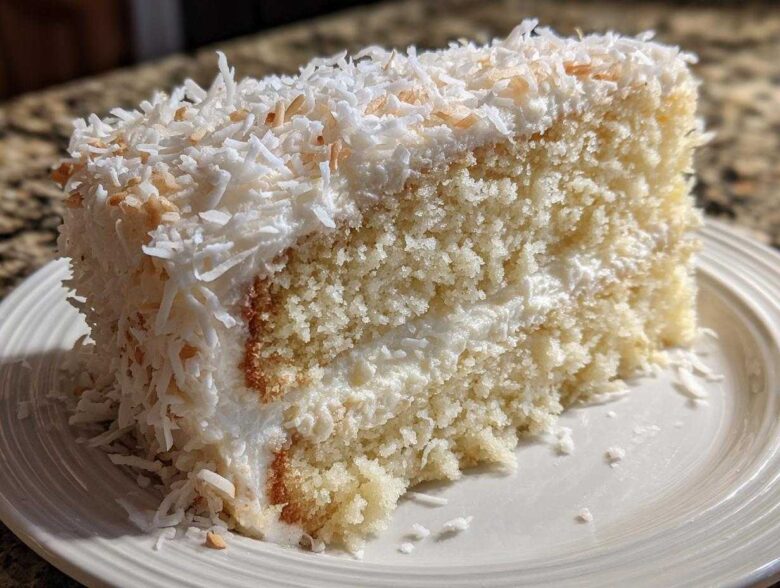
I remember when Ethan first tried making a proper Southern coconut cake. He swore by his grandmother’s “pinch of this” method, and I was standing there with my digital scale, completely stressed! But wow, after a few kitchen conversations—and a lot of taste testing—we figured out the blueprint. This isn’t just any dessert; this is truly the Best Moist & Fluffy Southern Coconut Cream Cake Recipe you are ever going to make. If you’ve dreamed about that bakery-style perfection but were scared of dry layers, stop worrying. This recipe has the spirit of Ethan’s family tradition baked right in, tested meticulously by yours truly. We actually share a little more about how we merged our styles over at my About Us page!
Why This Southern coconut cake Recipe is Your New Favorite
Let’s be honest, you want a coconut cake that tastes like it came from a fancy Southern bakery, right? Well, this is it! This coconut cake recipe consistently delivers the results we all crave: ultimate moisture, cloud-like fluffiness, and that unmistakable tropical punch.
- It’s genuinely bakery style—you won’t believe you made these layers yourself!
- It’s the absolute best coconut cake for birthdays, holidays, or when you just need a guaranteed showstopper.
- The frosting is outrageously creamy; it makes the entire dessert sing.
If you’re looking for other reliably moist layer cakes, you should check out my perfect vanilla layer cake guide for comparison!
Achieving the Perfect Moist coconut cake
The trick here is leaning into the coconut flavor without sacrificing tenderness. We insist on using full-fat coconut milk in the batter, just like in the recipe notes. That extra fat content ensures the crumb stays buttery soft and wonderfully saturated, which is how you guarantee a truly moist coconut cake recipe every single time.
Fluffy coconut cake Layers Made Simple
Fluffiness comes down to chemistry, and that means temperature! You absolutely cannot rush getting your butter, eggs, and milk to room temperature. When those ingredients meet, they emulsify beautifully, trapping air far better than if they were cold. That trapped air is your ticket to those airy, fluffy coconut cake layers.
Gathering Ingredients for Your coconut cream cake Recipe
Okay, now that we know why this cake is the absolute best, let’s get organized! Ethan always says baking is 90% preparation, and he’s probably right when it comes to a complex coconut cream cake recipe like this one. We need quality stuff, and everything needs to be ready to go at the right temperature. Trust me, setting out your dairy and eggs ahead of time is non-negotiable for that perfect structure. Grab your mixing bowls; here is exactly what you need!
For the Light and Fluffy Cake Layers
- 2 1/2 cups all-purpose flour
- 1 1/2 cups granulated sugar
- 1 tablespoon baking powder
- 1/2 teaspoon salt
- 1 cup unsalted butter, softened
- 4 large eggs, room temperature
- 1 cup whole milk, room temperature
- 1 teaspoon vanilla extract
- 1/2 cup coconut milk (full fat)
- 1 cup sweetened shredded coconut, plus more for coating
- 1/2 cup coconut extract (optional, for extra flavor)
For the Dreamy coconut frosting homemade
- 1 (8 ounce) package cream cheese, softened
- 1/2 cup unsalted butter, softened (for frosting)
- 4 cups powdered sugar, sifted
- 1/4 cup heavy cream
- 1 teaspoon coconut extract (for frosting)
Step-by-Step Instructions for the Best coconut cake
Alright, this is where the magic happens! Ethan always jokes that I treat this part like a science experiment, but honestly, following the order is key to making sure we get that stunning, high-performing coconut layer cake we’re aiming for. Before we even touch the mixer, crank your oven up to 350°F (175°C). Make sure those round pans are greased, floured, and have parchment circles on the bottom—that’s your insurance policy against sticking. If you’re looking for more general layering tips, I compiled a whole guide on easy layer cake recipes, but this particular formula is perfect.
Mixing and Baking the coconut layer cake
Start by whisking your dry ingredients together, and then add that softened butter. You’re beating it on low until it looks like coarse sand. This is important! Then, we slowly introduce the liquid—the pre-whisked eggs, milk, and coconut milk mixture. Go slow, mix on low, and remember this golden rule: do not overmix the batter! Once the flour streaks just disappear, gently fold in your cup of shredded coconut and any optional extract. Pop those pans in the oven for about 28 to 32 minutes. Test them clean, let them chill for a quick 10 minutes in the pan, and then get them onto a wire rack to cool completely. Seriously, cool them all the way, or the frosting melts.
Creating the Creamy coconut cream cake Frosting
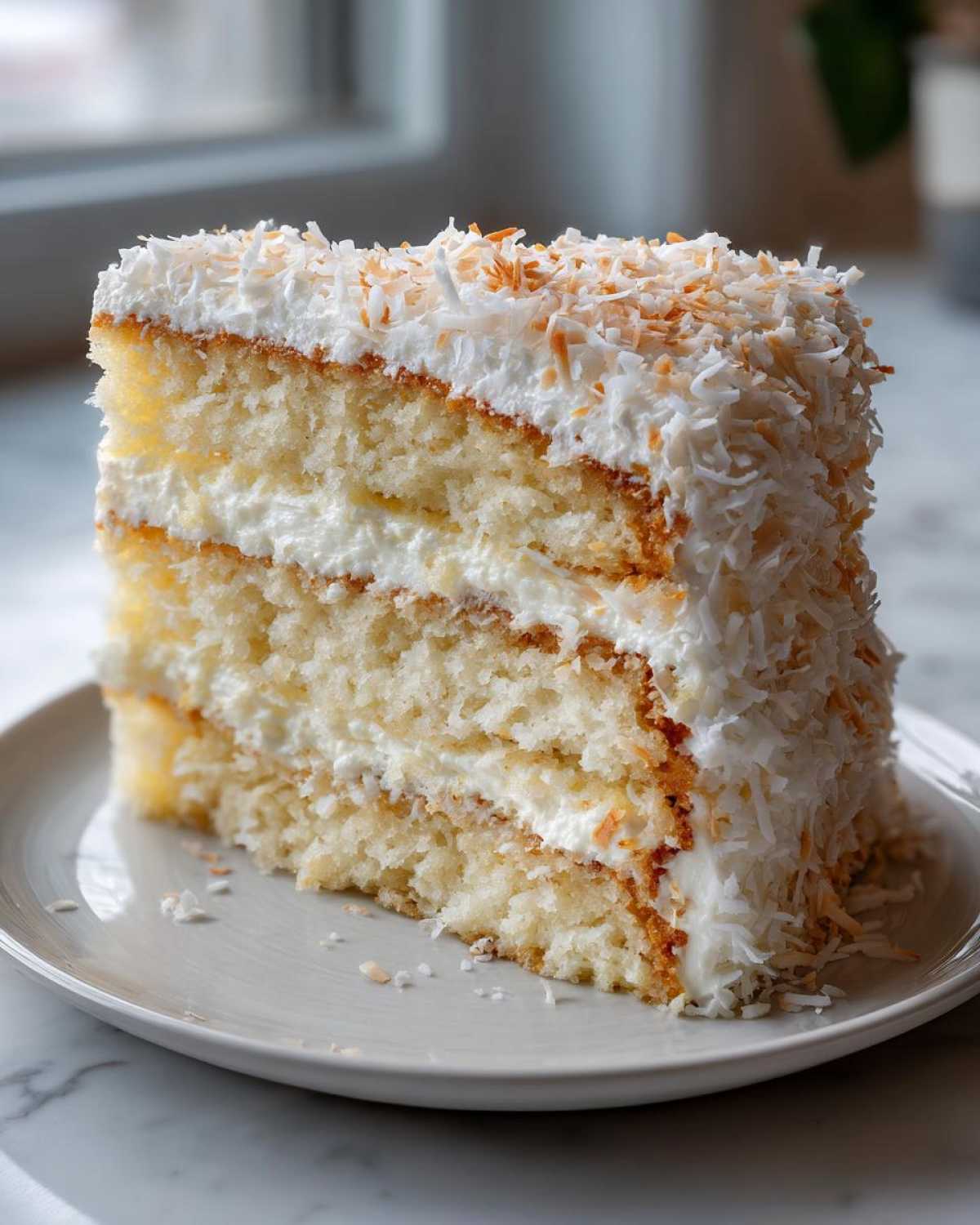
While those layers chill, let’s make that dreamy coconut frosting homemade. You need your cream cheese and the other half-cup of butter fully softened; beat those together until they are perfectly smooth—no lumps allowed! Then, slowly rain in that sifted powdered sugar so it doesn’t fly everywhere. Once it’s mostly combined, add your heavy cream and the coconut extract. Now, turn the mixer up to medium-high and let it whip for a good three minutes. You want it light, you want it fluffy, you want it ready to stand up tall!
Assembling Your homemade coconut cake
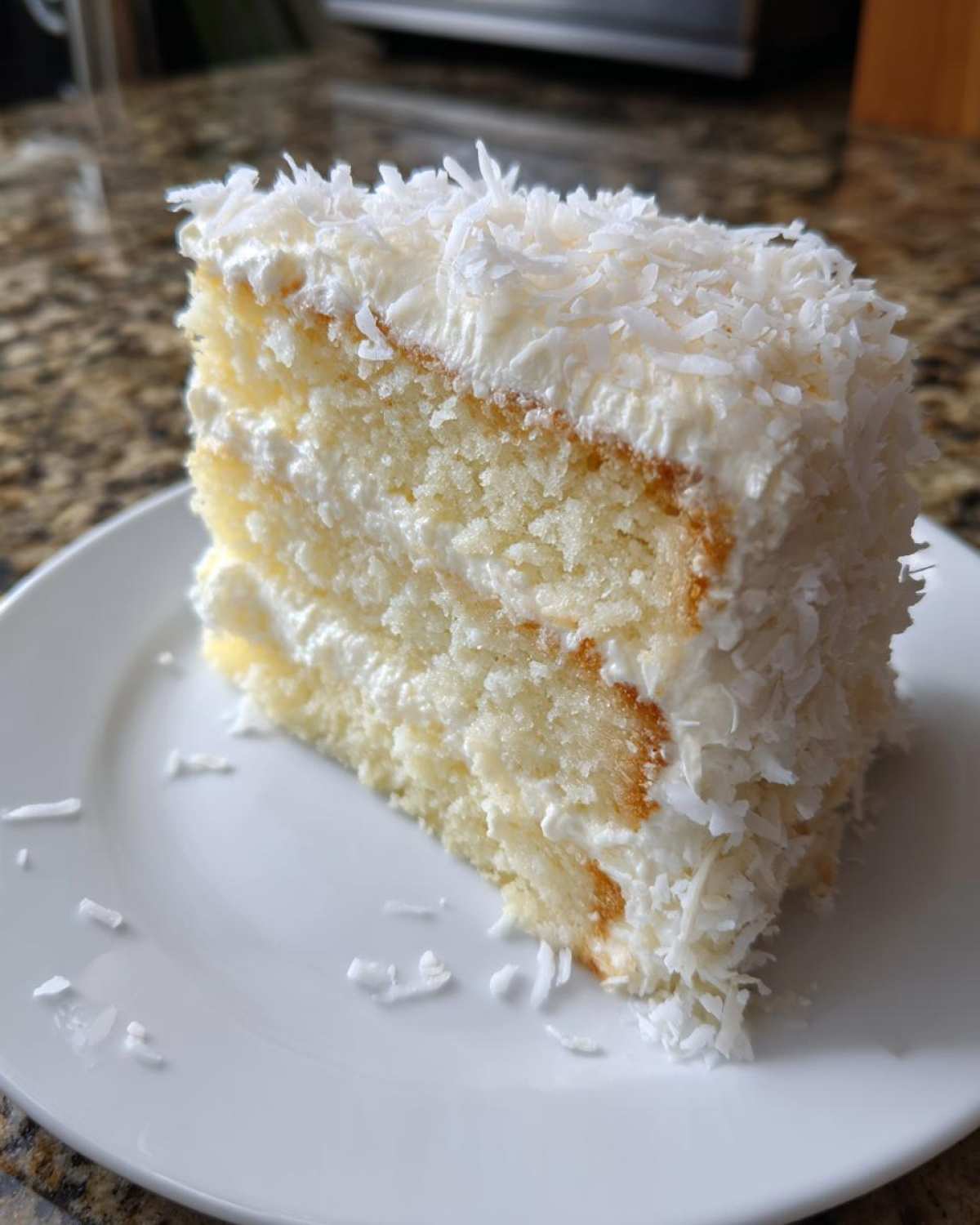
Once those beautiful layers are totally cool, it’s time to stack! Center the first layer, slather on about a third of that incredible frosting, and repeat that process for the second layer. Take the remaining frosting and cover the whole thing—top and sides. For the classic look, take your extra sweetened shredded coconut and gently press it all over the frosting until it looks snow-dusted. This homemade coconut cake needs a little nap before serving, though! Cover it gently and let it chill for at least 30 minutes to set up perfectly before you slice into it.
Expert Tips for a Bakery Style coconut cake
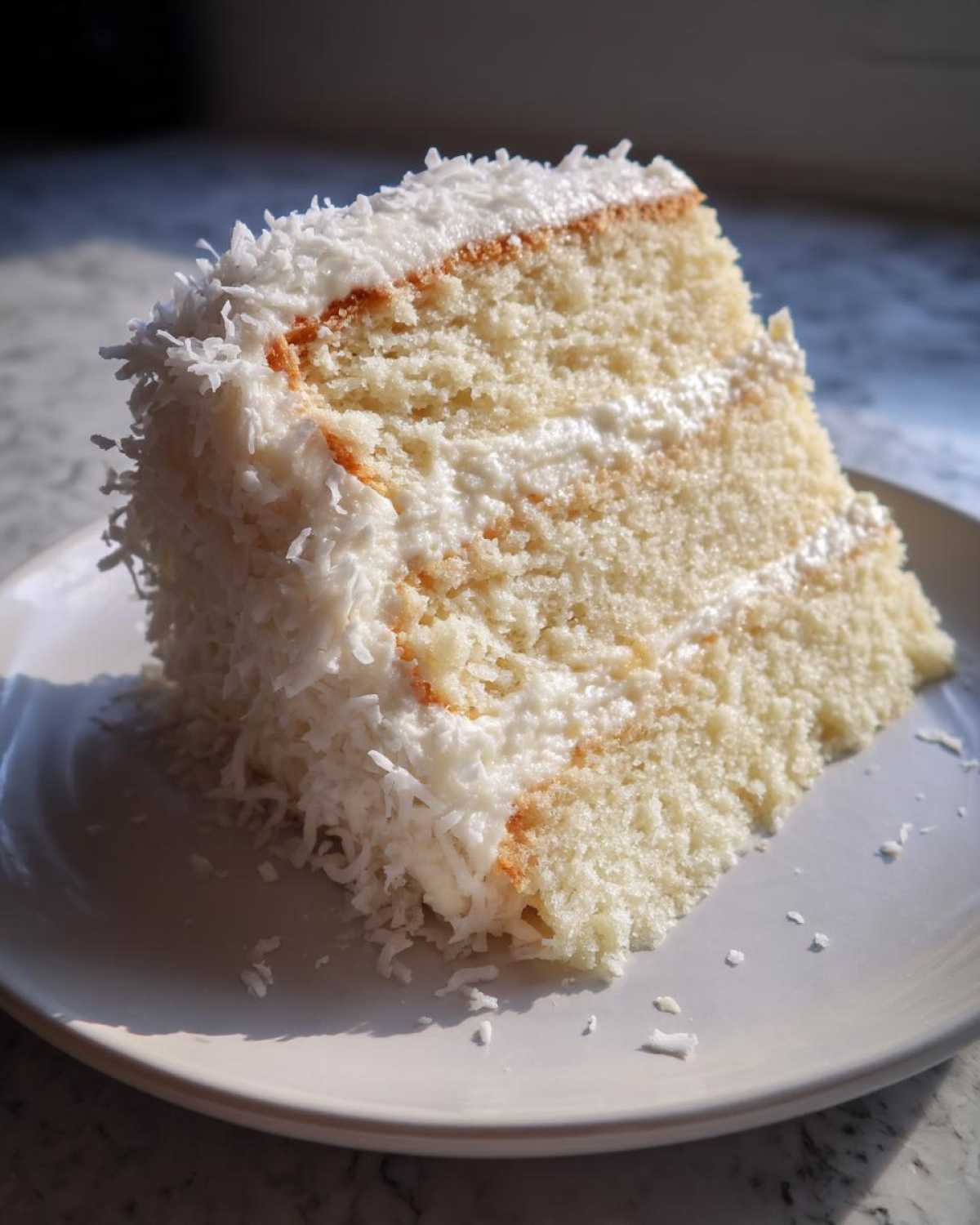
We’ve given you the blueprint for this incredible bakery style coconut cake, but for that extra boost of flavor that makes people ask where you bought it, you need the insider secrets! Ethan and I agree that leaning into tradition while embracing a small modern tweak is the key to making any recipe shine. These little additions are what turn a good cake into an unforgettable one. If you want to see more of our kitchen experiments, you can always browse our general blog feed!
- The notes said it, and I agree: if you have the time, substituting some of that all-purpose flour with cake flour gives you an even more tender crumb. It’s a subtle difference, but you’ll notice it!
- Remember, we’re aiming for complexity. Don’t skimp on the full-fat coconut milk; that dairy fat really helps keep the cake light and moist.
- This cake freezes beautifully too! Once it’s fully frosted and chilled, wrap it tightly. It thaws out perfectly so you can plan ahead for celebrations.
Ingredient Secrets for Maximum Flavor
Ethan is my resident flavor expert, and his first piece of advice when we were fiddling with this recipe was to give the coconut flakes a little heat. He insists that gently toasting the sweetened shredded coconut before you fold it in, or pressing it onto the outside, deepens that tropical sweetness beautifully. It only takes a few minutes in a dry pan over medium heat—watch it closely, it burns fast! If you want even more depth, check out some other brilliant baking ideas over at Flavorry. It’s all about maximizing those core tropical notes!
Making Variations of Your Tropical coconut dessert
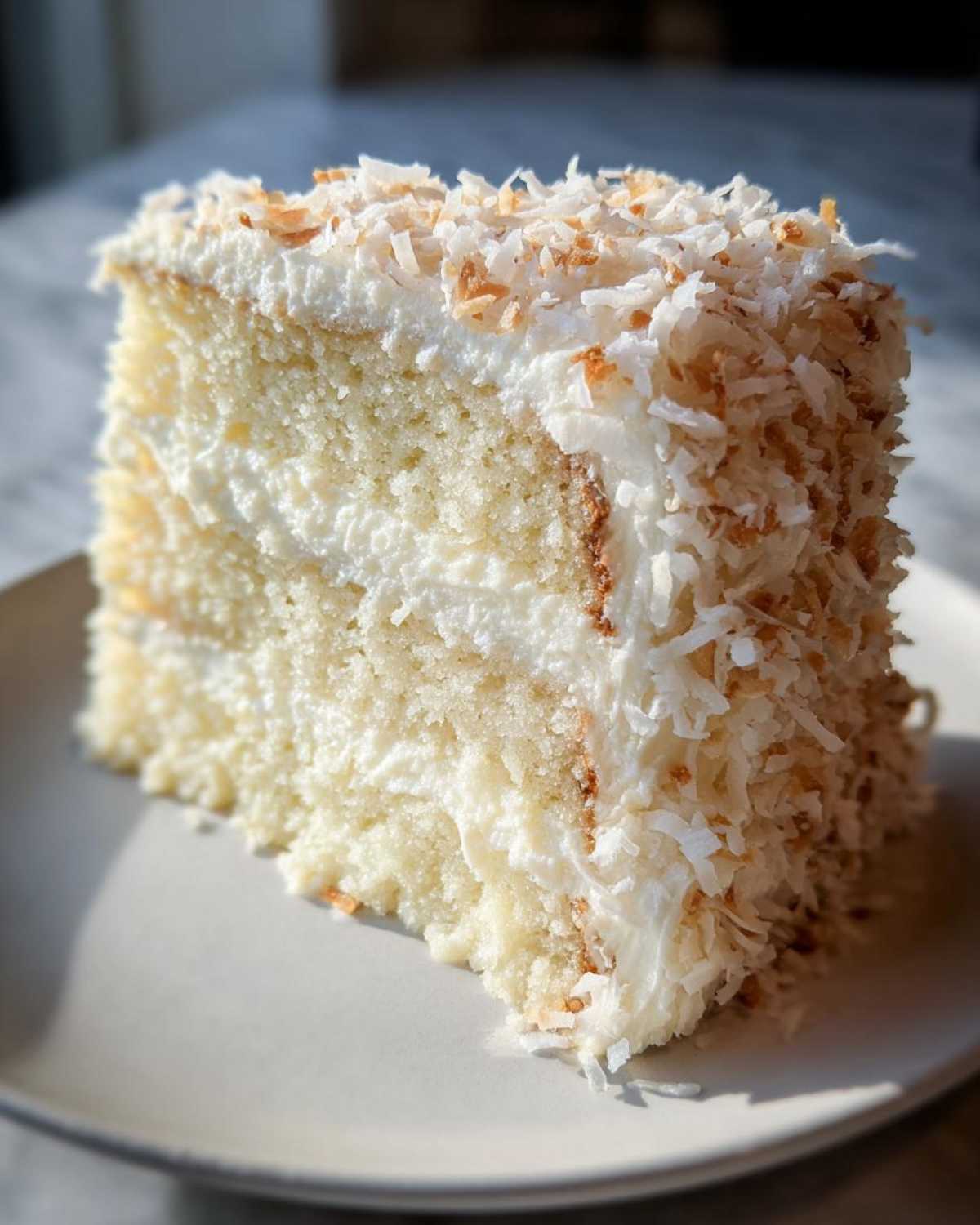
While I stand by our stacked layer cake as the ultimate version of this recipe, I totally get it—sometimes you need a different shape or a totally different texture! We love experimenting back and forth in the kitchen, and this batter is super versatile. You can easily pivot from a classic celebration cake to a casual sheet dessert or even a gorgeous Bundt without losing that amazing tropical flavor profile we built in.
Turning this into a coconut cream poke cake
If you’re looking for something ultra-moist and super easy to serve at a casual gathering, a poke cake is fantastic! After your layers (use just two 9-inch rounds instead of three) come out of the oven and are still slightly warm but not hot, grab a wooden skewer or the handle of a wooden spoon. Poke holes all over the surface—I mean deep holes! Then, gently pour a thin mixture of canned coconut milk or even a touch of sweetened condensed milk over the top. It seeps right down into the cake! You can find a similar idea, though they use a different base recipe, over at The Country Cook. Frost as usual once cool, and you’ve got an extra layer of creamy goodness locked inside!
Ideas for a coconut bundt cake
A coconut bundt cake is seriously dramatic looking, and this batter works wonderfully well for that presentation too. You just need to be careful with your baking time. A standard Bundt pan takes longer than thin layers because the heat has to penetrate that big center. You’ll probably need about 15 or 20 minutes extra baking time, so start checking around 45 minutes in. It often works best with just a simple glaze poured over the top instead of a thick frosting. If you’d like to check out a recipe specifically tailored for that pan, I wrote down my general tips for a moist glaze coconut bundt cake here!
Serving Suggestions for this Fluffy coconut cake
Because this fluffy coconut cake is such a classic, it fits practically every celebration you can think of! For birthdays, Ethan always suggests adding a burst of color with fresh raspberries sprinkled around the base for a lovely contrast to all that white sweetness. If you’re using this for a bigger holiday like Easter or Christmas, it pairs amazingly well with strong coffee. For a truly decadent experience, you could serve a small slice next to a scoop of good vanilla bean ice cream, or check out this stunning Southern Coconut Cream Layer Cake inspiration online if you want to go all out. Don’t forget to peek at my ideas for birthday cake ideas with coconut too!
Storage and Reheating Instructions for your coconut cake
Because we have that incredible, tangy cream cheese in the frosting, we absolutely must refrigerate this coconut cake. Keep it in an airtight container—plastic wrap is your friend here—for up to four days. When you’re ready to serve, pull it out about an hour ahead of time. Seriously, let it come back toward room temperature! That slight warming really lets the moisture and the coconut flavor bloom again. You don’t want to eat this gorgeous cake straight out of the cold fridge; give it a little time to soften up!
Frequently Asked Questions about the moist coconut cake recipe
I know sometimes the questions feel endless when you’re tackling a new recipe, especially one as important as the best coconut cake! Ethan and I get asked pretty similar things every time we bring this to a gathering, so I compiled the most common ones right here. Hopefully, this clears up everything you need to know before you start mixing!
Can I make this a dairy-free coconut cake?
That’s a great question, especially for allergies! Yes, you totally can adapt this! For the cake layers, swap the regular butter for a good high-quality plant-based butter substitute, and use oat or soy milk instead of whole milk, keeping the full-fat coconut milk in there for flavor. For the coconut frosting homemade, use dairy-free cream cheese alternatives and stick to the heavy cream substitute—maybe coconut cream that’s been chilled overnight—to keep that dreamy texture.
What is the secret to a truly fluffy coconut cake?
If you remember one thing from this whole recipe guide, let it be this: **do not overmix!** Once you add that flour mixture, you only need to mix on low just until you see the dry streaks vanish. Overbeating develops gluten, which gives you a chewy, dense texture instead of the light, fluffy coconut cake we are aiming for. Also, ensure your baking powder is fresh; good leavening is what gives the cake that wonderful lift!
Is it better to use fresh or sweetened shredded coconut in the batter?
We call for sweetened shredded coconut in the batter because it adds critical moisture and sweetness, especially because we are trying to achieve that ultimate moist coconut cake recipe. However, if you only have unsweetened, you can absolutely use it, but you might want to add an extra teaspoon of sugar to the cake mixture just to balance it out. For coating the outside, either works, but remember the toasted technique I mentioned earlier for the best tropical flavor!
How do I make sure this bakery style coconut cake stays level?
This is the bane of every layer cake baker! Since our recipe already calls for quality ingredients, the main issue is usually oven hot spots. If your cakes are consistently dome-shaped, you need to invest in *bake even strips*—those fabric things you soak in water and wrap around the outside of the pan. They insulate the edges so the whole cake rises together. It’s one of my favorite tools I learned about researching ways to achieve a perfect level cake!
Nutritional Estimates for This Classic coconut dessert
Okay, so we covered the flavor and the technique, but I know some of you are curious about the facts behind the fluff! Since this is a celebratory coconut dessert—loaded with butter, cream cheese, and sugar—it definitely falls into the rich category. Please remember these numbers are just my best guesses based on the amounts listed in the recipe for 12 standard slices. I’m the researcher, so I ran the numbers, but take them as a general guide!
Here is what you can generally expect per slice of this incredible Southern coconut cake:
- Serving Size: 1 slice
- Calories: 450
- Sugar: 55g
- Sodium: 250mg
- Fat: 24g
- Saturated Fat: 15g
- Unsaturated Fat: 9g
- Trans Fat: 0.5g
- Carbohydrates: 60g
- Fiber: 1g
- Protein: 5g
- Cholesterol: 90mg
Yes, it’s definitely a treat, but every single calorie is worth it when you take that first bite of creamy, fluffy goodness!
PrintThe Best Moist & Fluffy Southern Coconut Cream Cake Recipe
Bake a show-stopping, bakery-style coconut layer cake that is incredibly moist and fluffy. This classic Southern coconut cake features tender layers and a dreamy coconut cream frosting, perfect for any celebration.
- Prep Time: 30 min
- Cook Time: 30 min
- Total Time: 60 min
- Yield: 12 servings
- Category: Dessert
- Method: Baking
- Cuisine: American
- Diet: Vegetarian
Ingredients
- 2 1/2 cups all-purpose flour
- 1 1/2 cups granulated sugar
- 1 tablespoon baking powder
- 1/2 teaspoon salt
- 1 cup unsalted butter, softened
- 4 large eggs, room temperature
- 1 cup whole milk, room temperature
- 1 teaspoon vanilla extract
- 1/2 cup coconut milk (full fat)
- 1 cup sweetened shredded coconut, plus more for coating
- 1/2 cup coconut extract (optional, for extra flavor)
- 1 (8 ounce) package cream cheese, softened
- 1/2 cup unsalted butter, softened (for frosting)
- 4 cups powdered sugar, sifted
- 1/4 cup heavy cream
- 1 teaspoon coconut extract (for frosting)
Instructions
- Preheat your oven to 350°F (175°C). Grease and flour three 8-inch round cake pans. Line the bottoms with parchment paper circles.
- In a large bowl, whisk together the flour, granulated sugar, baking powder, and salt.
- Add the softened butter to the dry ingredients. Beat with an electric mixer on low speed until the mixture resembles coarse sand.
- In a separate bowl, whisk together the eggs, whole milk, vanilla extract, and coconut milk until combined.
- Gradually add the wet ingredients to the dry ingredients, mixing on low speed until just combined. Do not overmix.
- Gently fold in the 1 cup of shredded coconut and the optional coconut extract for the cake layers.
- Divide the batter evenly among the prepared cake pans.
- Bake for 28 to 32 minutes, or until a toothpick inserted into the center comes out clean.
- Let the cakes cool in the pans for 10 minutes before inverting them onto a wire rack to cool completely.
- Prepare the Coconut Cream Frosting: In a large bowl, beat the softened cream cheese and 1/2 cup softened butter until smooth and creamy.
- Gradually add the sifted powdered sugar, mixing on low speed until incorporated.
- Add the heavy cream and coconut extract. Beat on medium-high speed until the frosting is light and fluffy, about 3 minutes.
- Once the cake layers are completely cool, place one layer on a serving plate. Spread about one-third of the frosting evenly over the top.
- Place the second layer on top and frost it. Top with the final layer.
- Frost the top and sides of the entire cake with the remaining frosting.
- Press extra sweetened shredded coconut onto the top and sides of the cake for a beautiful finish. Chill for at least 30 minutes before slicing and serving your homemade coconut cake.
Notes
- For extra moist cake layers, you can substitute half of the all-purpose flour with cake flour.
- Toasting the shredded coconut lightly before coating the cake deepens the tropical flavor.
- If you want a stronger coconut flavor in the cake itself, use coconut milk instead of all the whole milk called for in the batter.
Nutrition
- Serving Size: 1 slice
- Calories: 450
- Sugar: 55g
- Sodium: 250mg
- Fat: 24g
- Saturated Fat: 15g
- Unsaturated Fat: 9g
- Trans Fat: 0.5g
- Carbohydrates: 60g
- Fiber: 1g
- Protein: 5g
- Cholesterol: 90mg