

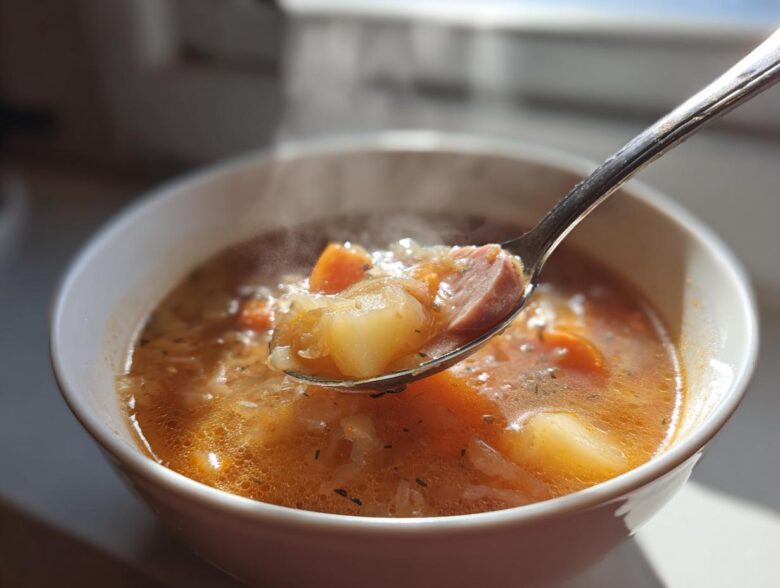
When those first truly chilly winds hit, I swear my body immediately craves something deeply comforting, heavy, and just a little bit tangy. Forget delicate little broths; we need substance! That’s why my absolute go-to when winter officially rolls around is my take on Polish sauerkraut soup, or Kapusniak. This isn’t just soup; it’s a full dinner hug in a bowl. My grandmother used to make this for us after fall festivals, and honestly, nothing beats the smell of it simmering away. The trick, which I learned after testing far too many versions, is finding that perfect blend where the smoked Kielbasa and soft potatoes carry the bright, sour punch of the cabbage perfectly. Trust me, once you try this traditional Eastern European Soup, it’ll be the first comfort food soup you reach for.
Why This Hearty Sauerkraut Soup Recipe Stands Out
I’ve made a lot of soups over the decades, but this Kapusniak is special. When you’re looking for a soup that truly sticks to your ribs and warms you from the inside out, this is the one. People try to find shortcuts, but I promise you, the little steps here make a huge difference in the final warming and filling flavor.
- It’s a True One Pot Soup Dinner: Seriously, toss everything in one big pot! You brown the sausage, soften the veggies, simmer it all down, and you’re done. Cleanup is a breeze, which is exactly what you need when it’s cold outside.
- The Flavor is Perfectly Balanced: A lot of sauerkraut soup recipes are either too harsh or too bland. Because we use the reserved liquid from the cabbage with the savory broth, you get that signature, mouth-watering tanginess perfectly balanced by the smoked Kielbasa. It sings!
- It Gets Better Overnight: This fits right into the best winter soup recipes category because it tastes even better the next day. If you have leftovers (which you will!), the potatoes soak up all that delicious broth flavor.
- It’s Authentic Comfort: If you want a genuine taste of Poland or Ukraine, this variation of a traditional Eastern European Soup delivers. It uses marjoram and a bay leaf, which are staples in Eastern European cooking, making it far more interesting than just a simple potato cabbage soup.
I really want you to trust me on this one because it’s the easiest way to get that deep, savory flavor without spending all day over the stove. If you’re tired of thin, watery soups, check out how you can use the slow cooker for some other hearty meals, but for tonight, stick to the stovetop for this Kapusniak!
Essential Ingredients for Authentic Sauerkraut Soup (Kapusniak)
When we talk about making the best sauerkraut soup, we aren’t messing around with fancy extras. This is about tradition and making sure every ingredient pulls its weight to deliver that perfect, robust flavor. Getting the right shopping list is half the battle for this cozy supper.
You absolutely must start with a good, smoked Kielbasa. Don’t even think about using raw sausage here; we need that smoky depth right from the start. Make sure your potatoes are peeled and cubed—I prefer Yukon Golds because they hold their shape nicely but still get fluffy. And please, please make sure your sauerkraut is well-drained! Seriously, you are only reserving the liquid for later, not dumping pounds of brine into the pot straight away.
We keep the vegetables simple: just onion, carrots, and celery to build that aromatic base. If you’re feeling decadent and want a true creamy sauerkraut soup, that half-cup of heavy cream at the end is non-negotiable. It cuts the harshness and makes it incredibly luxurious.
Ingredient Notes and Substitution Tips for Your Sauerkraut Soup
This is where my experience comes in. If you want to skip the sausage for a minute, my grandmother preferred using smoked pork ribs in her original Polish sauerkraut soup recipes. The ribs simmer down and leave beautiful, shreddable meat behind, which is amazing, though Kielbasa wins for speed!
Now, pay close attention: the reserved sauerkraut liquid is sacred. That’s the concentrated sour tang! It’s essential for your sauerkraut soup recipe because the plain broth provides the body, but the liquid provides the soul. If you’re making this for a crowd and want to use thicker cuts of smoked pork—like bacon ends or shoulder—just be aware that you might need to adjust your simmering time to make sure that meat gets tender before you add your cream.
For those of you looking up other hearty meals, remember that ingredient quality matters, and it’s the same here. Don’t skimp on the smoked flavor!
Step-by-Step Instructions for Making the Best Sauerkraut Soup
Okay, listen up, because turning these beautiful ingredients into the best sauerkraut soup possible isn’t just about dumping everything in the pot at the same time. We need layering! If you follow this sequence, you’re going to end up with a ridiculously deep flavor that doesn’t taste rushed or raw. For the whole process, we are looking at about 60 minutes total, which I think is a fantastic payoff for a dinner this hearty.
Sautéing Aromatics and Browning the Kielbasa for Rich Sauerkraut Soup Flavor
First things first: grab your biggest pot—a Dutch oven is perfect for this. Heat a little oil over medium heat. Then, toss in your sliced Kielbasa. You want these slices to get just a little brown and crisp around the edges, kind of caramelizing the outside. This takes about 5 minutes. Use a slotted spoon to pull that glorious sausage out and set it aside; we don’t want it chewing up while we work on the vegetables.
Now, in that same pot, using all those delicious rendered sausage fats, drop in your chopped onion, carrots, and celery. We’re sautéing these until they start getting soft—about 7 minutes. This step builds the flavor base for your entire Kielbasa soup, so don’t rush the softening!
Simmering the Potato Cabbage Soup to Perfection
Once your veggies are happy, it’s time for the main event! Add your cubed potatoes, the drained sauerkraut, your broth, that precious reserved sauerkraut liquid, marjoram, and the bay leaf. Give it all a good stir to make sure nothing is sticking on the bottom.
Bring the whole thing up to a strong boil over high heat, and once it’s bubbling hard, cut the heat way down, slap the lid on, and let it simmer gently for 25 minutes. This is the magic time where the potatoes get tender and the flavors marry up. This gentle simmer is what turns it into a real warm and filling soup. After that 25 minutes, throw the sausage back in for 5 more minutes just to heat it through. Remember to scoop out that bay leaf before you serve it! If you want more tips on cooking fast flavors, you can check out my guide to quick cooking chicken.

Variations on Traditional Sauerkraut Soup
While this exact recipe with Kielbasa and potatoes is my favorite hearty version—perfect for a big chilly night—I know not everyone eats pork or carbs all the time! The beauty of sauerkraut soup is how adaptable the cabbage base is. If you need to adjust it for your diet, don’t fret; it’s super easy to tweak.
For those looking for a meat-free option, making a Vegan Sauerkraut Soup is no trouble at all. Just swap out the chicken broth for a really good quality vegetable broth—the richer, the better, as it has to carry all that flavor now. Instead of Kielbasa, you can use smoked tofu pieces or even a nice store-bought plant-based sausage that has a smoky flavor profile. It keeps that savory depth you love! You’ll find more ideas for adapting flavors over on my guide to spicy stir-fries, but the concept is the same: swap the protein, keep the base.
And what about keto friends? The biggest hurdle in this recipe is the potatoes, right? To turn this into a Keto Sauerkraut Soup, simply omit the potatoes entirely! To make sure the soup doesn’t feel too thin, I recommend using extra cabbage—maybe add another cup or two of the fresh stuff near the end of the simmer. You can also boost the richness by increasing that heavy cream to a full cup, making it extra luscious instead of starchy. It keeps the amazing flavor of the tangy cabbage and sausage without the carbs.
See? This soup works for everyone. It really depends on what you need your dinner to be!
Serving Suggestions for Your Comfort Food Soup
Even the best sauerkraut soup recipe deserves the perfect sidekick! Since this Kapusniak is such a bold, tangy, and rich main event—a true comfort food soup powerhouse—you don’t want anything too complicated competing with it. The soup is already heavy on flavor and substance, so we keep the accompaniments simple and functional.
My absolute favorite thing to eat with this soup is a hearty piece of dark rye bread. You know the kind—thick, slightly sour, and dense? It’s perfect for dipping and truly soaking up every last bit of that savory broth. Don’t waste any of that flavor! You need something solid to mop up the bowl.
Now, addressing the creamy factor: if you opted *out* of the heavy cream in the soup itself (meaning you like it strictly tangy), then a big dollop of cold sour cream or créme fraîche right on top when you serve it is just heavenly. The contrast between the hot soup and the cool, creamy dairy is honestly magic. If you already added the cream to the pot, you might skip an extra dairy topping, though I won’t tell if you don’t!
For something green to cut through all that richness, you don’t need a full salad. A tiny side of something crisp works wonders. Think thinly sliced cucumbers tossed with a little vinegar and salt, or maybe just a simple handful of arugula to give you that peppery punch. It acts as a nice palate cleanser between those hearty spoonfuls.
And finally, garnish! Regardless of how you serve it, you absolutely *must* finish it with a generous sprinkle of fresh dill. I know dill isn’t everyone’s favorite, but for Eastern European dishes like this, it brings this incredible freshness that brightens the whole bowl up. It’s the final touch that makes it look professional and taste vibrant. If you’re looking for other great side ideas for your meals, you should check out my tips on quick salad bowls; sometimes a simple fresh crunch is all you need!
Storage and Reheating Instructions for Sauerkraut Soup
The best part about making a big pot of sauerkraut soup is knowing you have leftovers for lunch the next day! This soup is honestly better on day two, once all those onions and that marjoram have really had a chance to meld with the cabbage. I always make extra just for this reason!
Storing this is super straightforward, but we treat the creamy version a little differently than the tangy one. For simple leftovers—the basic Kielbasa and potato version—just let it cool down completely. Then, pop it into an airtight container. It keeps beautifully in the fridge for about four or five days. Because this is one of those ultimate winter soup recipes, I highly recommend freezing it! It freezes like a dream because of the cabbage and broth base. Divide it into individual serving containers—that way, you just grab one portion when you suddenly need a warm and filling soup.
Now, if you added that heavy cream at the end to make it luxurious, that changes things slightly during the reheating process. Cream can sometimes separate when frozen and then reheated too quickly. If you froze the creamy version, thaw it slowly overnight in the fridge first. When you go to reheat it on the stovetop, use lower heat than normal and stir it often. You want it to warm up gently, not come to a hard boil, or you might get that slightly grainy texture cream hates. If it looks a little separated when it’s warm, just aggressively whisk it for about 30 seconds; usually, that brings it right back together.
For the non-creamy, tangy version, you can reheat it straight from frozen in a saucepan, or even zap it in the microwave—it’s much more resilient! If you feel like the original tanginess has mellowed out too much after a few days, don’t be afraid to add a tiny splash of vinegar or a splash more of that reserved sauerkraut liquid right before serving. That wakes up all the flavors instantly!
Frequently Asked Questions About Sauerkraut Soup Recipe
I get so many questions because people want to make sure their sauerkraut soup recipe turns out just as comforting as mine! It’s natural to wonder about tweaking things when you’re dealing with something as specific as fermented cabbage. Here are the things folks ask me most often about making the best sauerkraut soup.
How do I make this a more Tangy Vegetable Soup?
That’s easy, and honestly, it depends on how much of that signature sour punch you want in your tangy vegetable soup! If you love that bright, sharp flavor hitting you right away, the easiest thing to do is simply add more of that liquid you reserved when you drained the sauerkraut. That liquid is pure concentrated flavor, so even an extra quarter cup can make a huge difference. Don’t dump it all in at once, though! Add it in half-cup increments while the soup is simmering and taste as you go. If you’re out of liquid or you want a super quick burst of sourness right at the end, a small squeeze of fresh lemon juice or even a teaspoon of white vinegar stirred in just before serving works wonders to wake up those flavors without adding more saltiness.
Can I use different meats besides Kielbasa in this Sauerkraut Soup?
Of course, you can! While I think the Kielbasa gives us that snappy texture and smoky flavor that pairs perfectly with the cabbage, this soup is rooted in resourcefulness, so swapping meats is totally acceptable! If you want deeper, richer flavor, think fattier and smokier. Try using chopped smoked ham hock or maybe even a few strips of thick-cut, quality bacon instead of the sausage. You’d start by rendering the bacon or hock fat first, just like we did with the Kielbasa. This is a perfect way to pivot your recipe if you’re trying to create new hearty soup ideas for your family. Just remember, those meats might need a little longer simmering time than the pre-cooked Kielbasa to ensure they are perfectly tender before you move on to the final steps.
Another thing people ask is about the difference between Polish Sauerkraut Soup (Kapusniak) and Ukrainian variations—honestly, the core is the same, but sometimes Ukrainian versions rely more on beef broth or might add a swirl of sour cream right into the main soup rather than just as a topping. It’s all delicious regional love!
I hope these tips help you customize your cooking! If you’re curious about the general things that make this site tick, you can always learn more about us over at our About Us page!
Estimated Nutritional Data for This Sauerkraut Soup
I always include this section because I know a lot of you track what you’re eating, even when reaching for major comfort food soup. Keep in mind that this is just an estimate for one serving (about 1.5 cups) of the standard recipe—the one using Kielbasa and heavy cream as listed.
- Calories: Around 350 per serving
- Fat: About 18 grams (this is where the Kielbasa and cream pitch in!)
- Carbohydrates: Roughly 30 grams (the potatoes add most of this)
- Protein: A solid 18 grams, thanks to all that sausage!
If you skip the heavy cream for a purely tangy version, your fat content will drop significantly. And if you follow the Keto Sauerkraut Soup notes I shared earlier, those carb numbers change drastically in the best way for that diet! For the most accurate information based on your specific brand choices, remember to check your package labels. For official details on how we calculate this data, stop by our site disclaimer.
Share Your Experience Making This Polish Sauerkraut Soup
That’s it! You’ve got the full rundown on how to make a deeply satisfying, authentic Polish sauerkraut soup that will warm up the whole family. I promise you, once you get that balance of savory Kielbasa and tangy cabbage just right, you’ll be making Kapusniak all winter long.
Now, I absolutely want to hear about it! Did you try making the creamy version, or did you stick to the tried-and-true tangy approach? Please leave a comment below telling me how it turned out, and if you found it easy to manage as an easy weeknight soup!
If you snap a picture of your steaming bowl of this sausage and sauerkraut soup, tag me on social media! I live for seeing your cozy creations. And if you have any lingering questions, don’t hesitate to reach out via the contact page. Happy cooking!
Estimated Nutritional Data for This Sauerkraut Soup
I always include this section because I know a lot of you track what you’re eating, even when reaching for major comfort food soup. Keep in mind that this is just an estimate for one serving (about 1.5 cups) of the standard recipe—the one using Kielbasa and heavy cream as listed.
- Calories: Around 350 per serving
- Fat: About 18 grams (this is where the Kielbasa and cream pitch in!)
- Carbohydrates: Roughly 30 grams (the potatoes add most of this)
- Protein: A solid 18 grams, thanks to all that sausage!
If you skip the heavy cream for a purely tangy version, your fat content will drop significantly. And if you follow the Keto Sauerkraut Soup notes I shared earlier, those carb numbers change drastically in the best way for that diet! For the most accurate information based on your specific brand choices, remember to check your package labels. For official details on how we calculate this data, stop by our site disclaimer.
Share Your Experience Making This Polish Sauerkraut Soup
That’s it! You’ve got the full rundown on how to make a deeply satisfying, authentic Polish sauerkraut soup that will warm up the whole family. I promise you, once you get that balance of savory Kielbasa and tangy cabbage just right, you’ll be making Kapusniak all winter long.
Now, I absolutely want to hear about it! Did you try making the creamy version, or did you stick to the tried-and-true tangy approach? Please leave a comment below telling me how it turned out, and if you found it easy to manage as an easy weeknight soup!
If you snap a picture of your steaming bowl of this sausage and sauerkraut soup, tag me on social media! I live for seeing your cozy creations. And if you have any lingering questions, don’t hesitate to reach out via the contact page. Happy cooking!
PrintHearty Polish Sauerkraut Soup (Kapusniak) with Kielbasa

Make a comforting, traditional Polish sauerkraut soup featuring smoked sausage and potatoes. This Kapusniak recipe is warming and perfect for cold weather.
- Prep Time: 20 min
- Cook Time: 40 min
- Total Time: 60 min
- Yield: 6 servings
- Category: Soup
- Method: Stovetop Simmering
- Cuisine: Polish
- Diet: Low Fat
Ingredients
- 1 tablespoon olive oil
- 1 pound Kielbasa sausage, sliced
- 1 large onion, chopped
- 2 carrots, peeled and sliced
- 2 celery stalks, sliced
- 1 pound potatoes, peeled and cubed
- 3 cups sauerkraut, drained (reserve liquid)
- 6 cups chicken or vegetable broth
- 1 cup reserved sauerkraut liquid
- 1 teaspoon dried marjoram
- 1 bay leaf
- Salt and black pepper to taste
- 1/2 cup heavy cream (optional, for creamy version)
- Fresh dill for garnish
Instructions
- Heat the olive oil in a large pot or Dutch oven over medium heat. Add the sliced Kielbasa and cook until lightly browned, about 5 minutes. Remove the sausage and set aside.
- Add the chopped onion, carrots, and celery to the pot. Cook until softened, about 7 minutes.
- Add the cubed potatoes, drained sauerkraut, broth, reserved sauerkraut liquid, marjoram, and bay leaf to the pot.
- Bring the soup to a boil, then reduce heat to low, cover, and simmer for 25 minutes, or until the potatoes are tender.
- Return the cooked sausage to the pot. Simmer for another 5 minutes to heat through.
- Remove the bay leaf. Season the soup with salt and pepper.
- If making the creamy version, stir in the heavy cream now and heat gently without boiling.
- Ladle the soup into bowls and garnish with fresh dill before serving.
Notes
- For a tangier soup, use more of the reserved sauerkraut liquid.
- If you prefer a thicker soup, mash a few of the potatoes against the side of the pot before serving.
- This soup freezes well for later use.
Nutrition
- Serving Size: 1.5 cups
- Calories: 350
- Sugar: 8
- Sodium: 850
- Fat: 18
- Saturated Fat: 7
- Unsaturated Fat: 8
- Trans Fat: 0
- Carbohydrates: 30
- Fiber: 6
- Protein: 18
- Cholesterol: 45